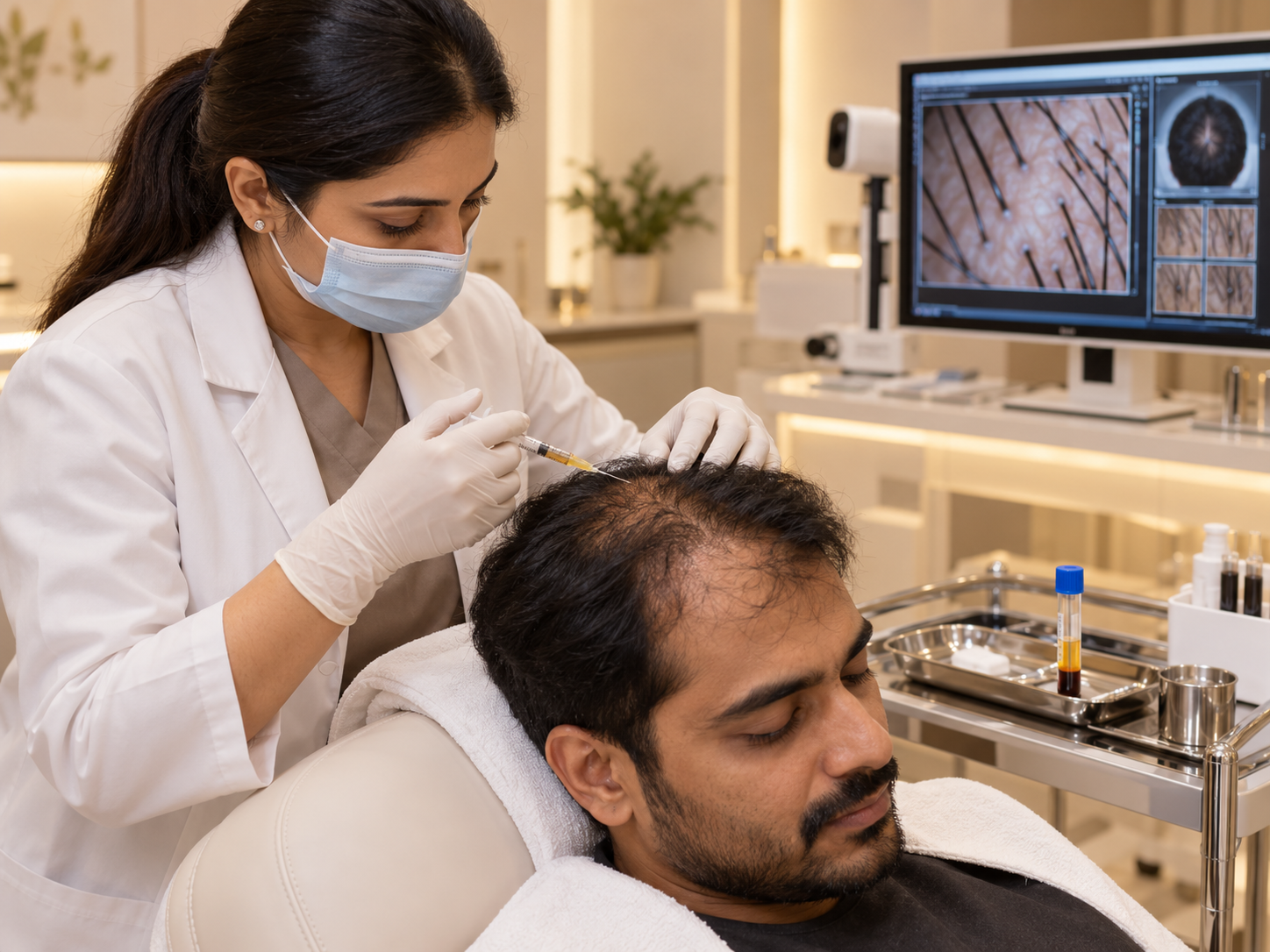
PRP Hair Therapy
A clinician-guided hair restoration treatment that uses platelet-rich plasma prepared from the client’s own blood and delivered into selected areas of the scalp to support existing follicles, hair quality and growth in appropriately selected cases.
About PRP Hair Therapy
““Use your own platelet concentrate to support healthier hair growth.””
PRP Hair Therapy at KAC
PRP stands for Platelet-Rich Plasma.
The treatment begins with a small sample of the client’s own blood.
The blood is processed using centrifugation to separate and concentrate the platelet-containing plasma fraction.
The prepared PRP is then delivered into selected areas of the scalp as part of a hair-restoration treatment plan.
Platelets contain biologically active growth factors involved in normal tissue signalling and repair processes.
In hair restoration, PRP is commonly used to support existing hair follicles and hair-growth activity in appropriately selected cases.
It may be considered for concerns such as:
Early pattern hair thinning
Reduced hair density
Progressive crown thinning
Frontal thinning
Diffuse thinning in selected cases
Hair-quality reduction
PRP is not appropriate for every form of hair loss.
That is why treatment at KAC begins with hair and scalp assessment before PRP is recommended.
Treatment Procedures and Details
Is PRP Right for You?
Before treatment, we assess:
• Hair-loss pattern
PRP tends to be more relevant when active follicles remain.
• Hair density
The degree and distribution of thinning are documented.
• Follicle condition
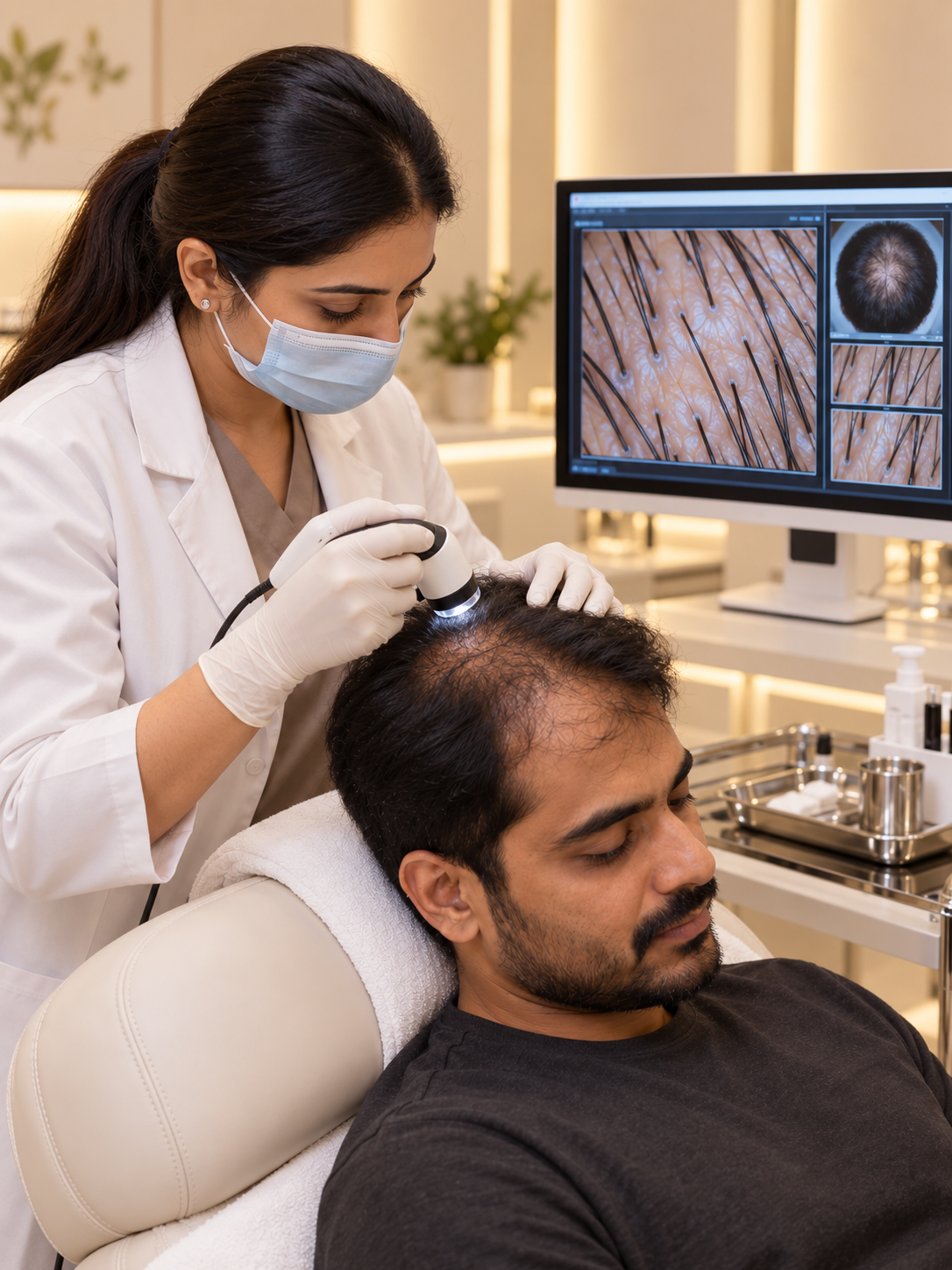
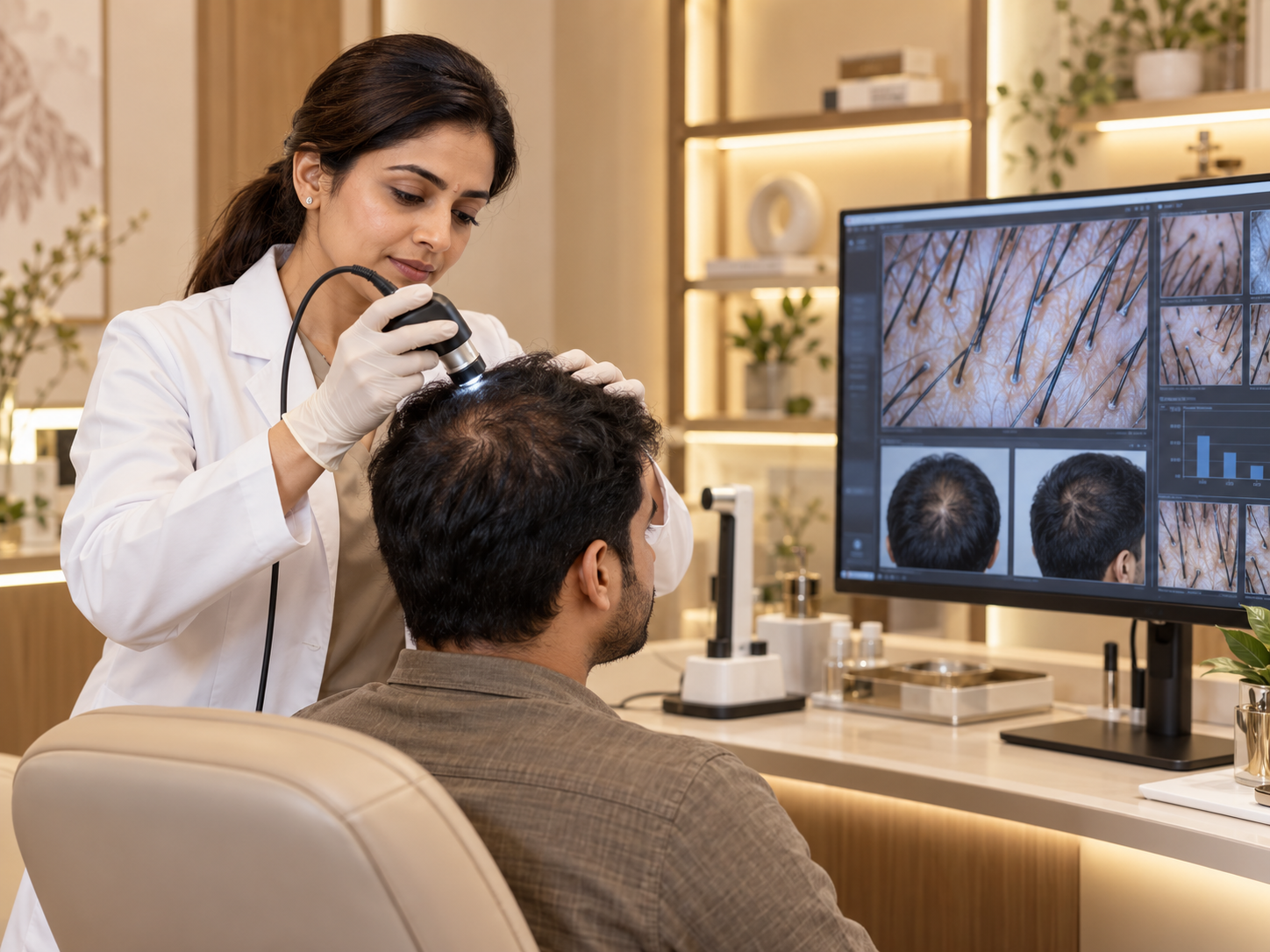
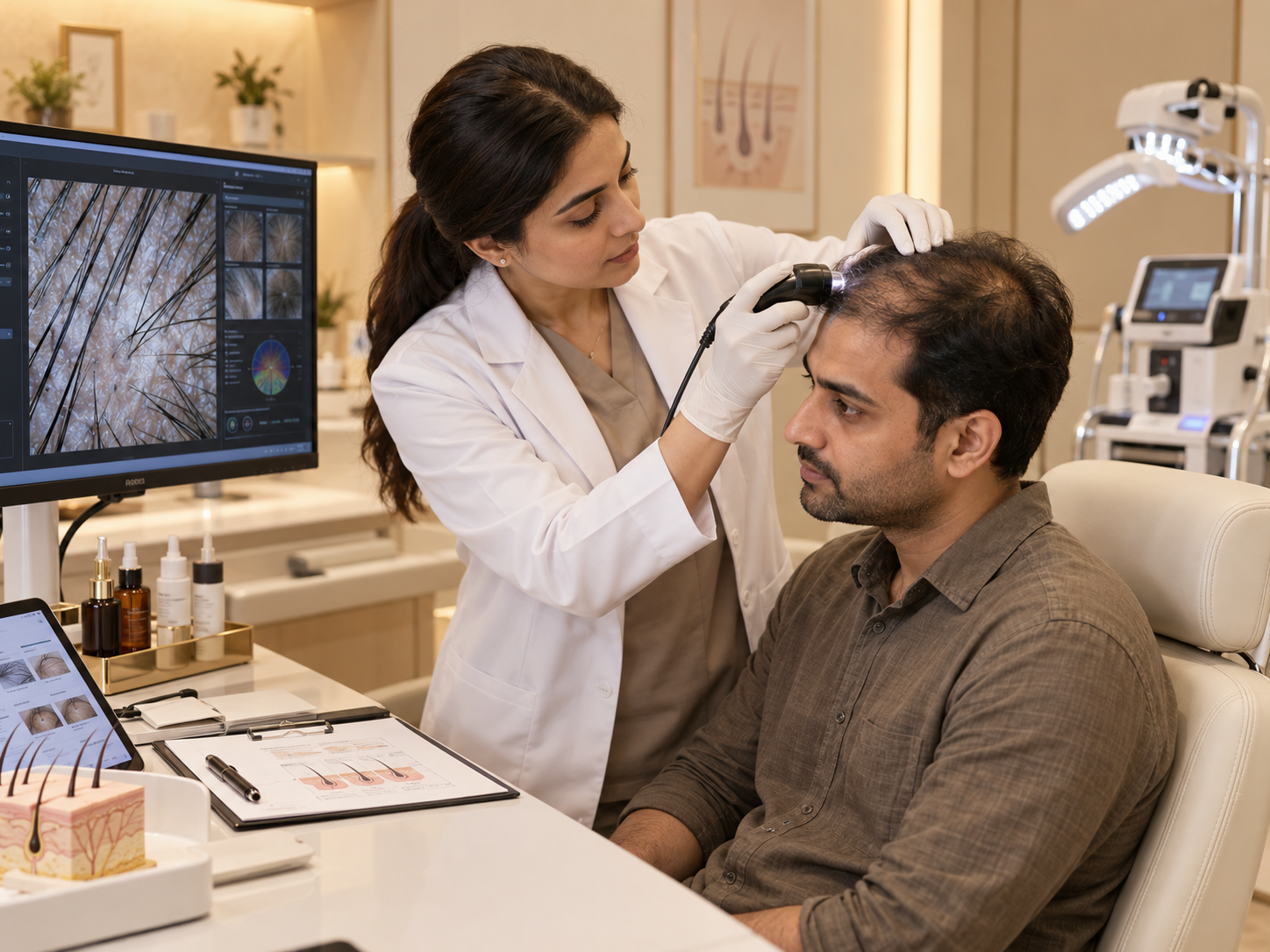
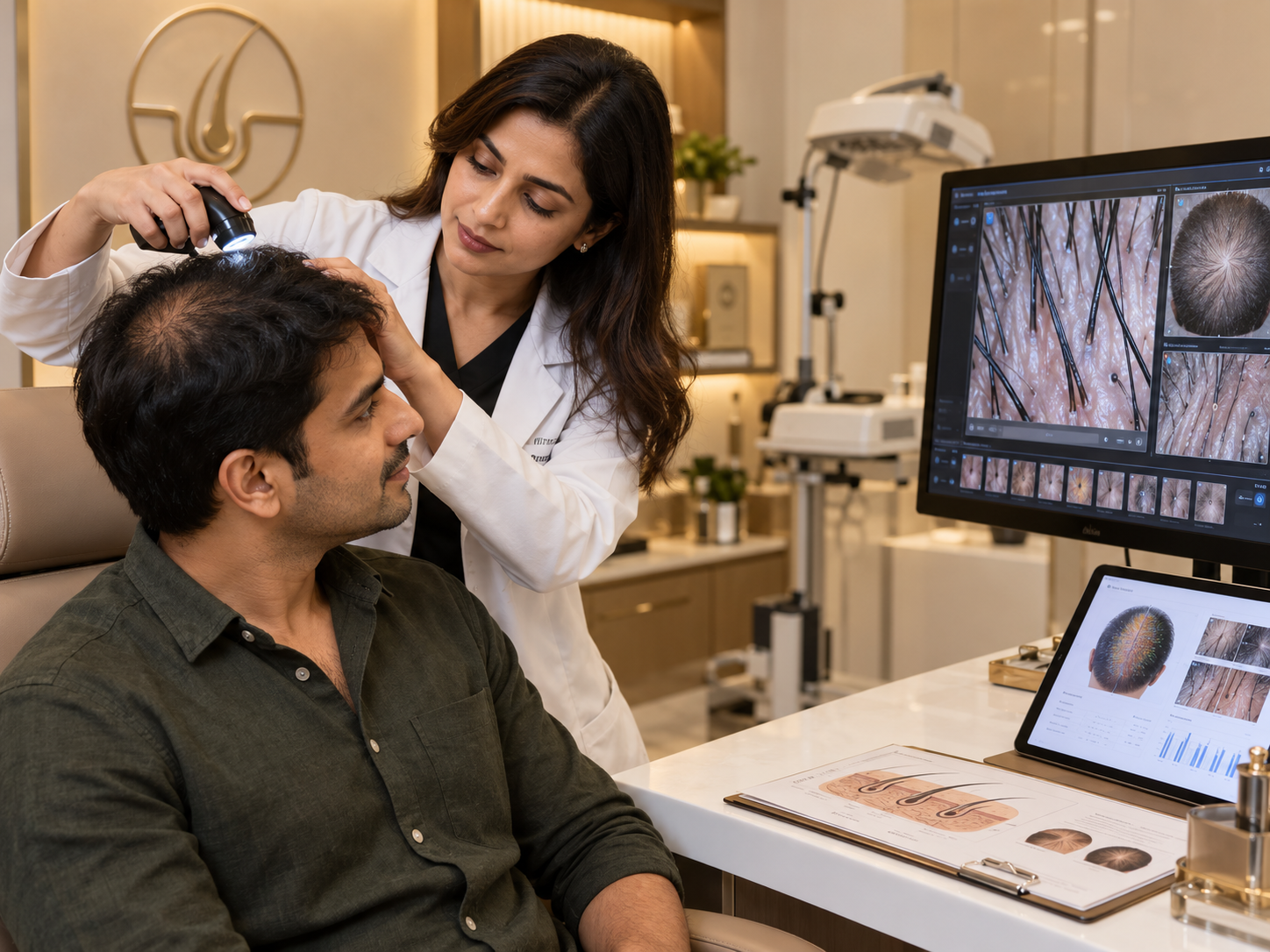
Trichoscopy may help identify miniaturisation and remaining follicular activity.
• Scalp health
Inflammation, infection or uncontrolled scalp disease may need treatment first.
• Duration of hair loss
Long-standing areas with advanced follicular loss may respond poorly.
• Medical history
Relevant health conditions, medications and bleeding-related concerns are reviewed.
• Nutritional factors
Iron or other deficiencies may need correction if present.
• Previous treatments
Past PRP, GFC, medications or other hair-restoration procedures are considered.
The aim is to identify whether PRP is actually likely to add value before beginning treatment.
What Happens During PRP Hair Therapy?
Step 1 — Hair & Scalp Assessment
The treatment area and hair-loss pattern are reviewed.
Step 2 — Blood Collection
A small amount of blood is collected using sterile technique.
Step 3 — PRP Preparation
The sample is centrifuged to obtain the platelet-rich plasma fraction.
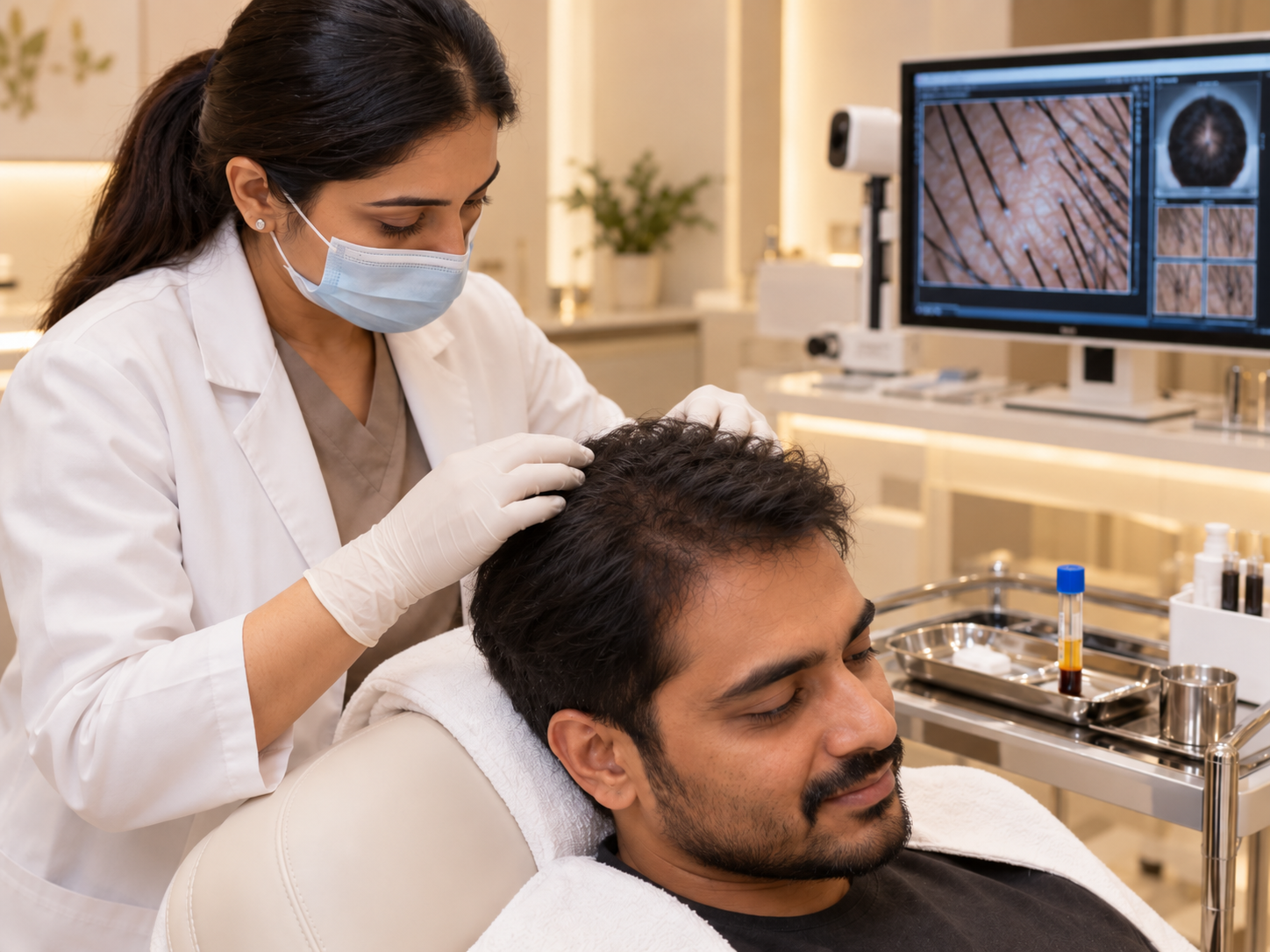
Step 4 — Scalp Preparation
The scalp is cleansed and prepared according to the treatment protocol.
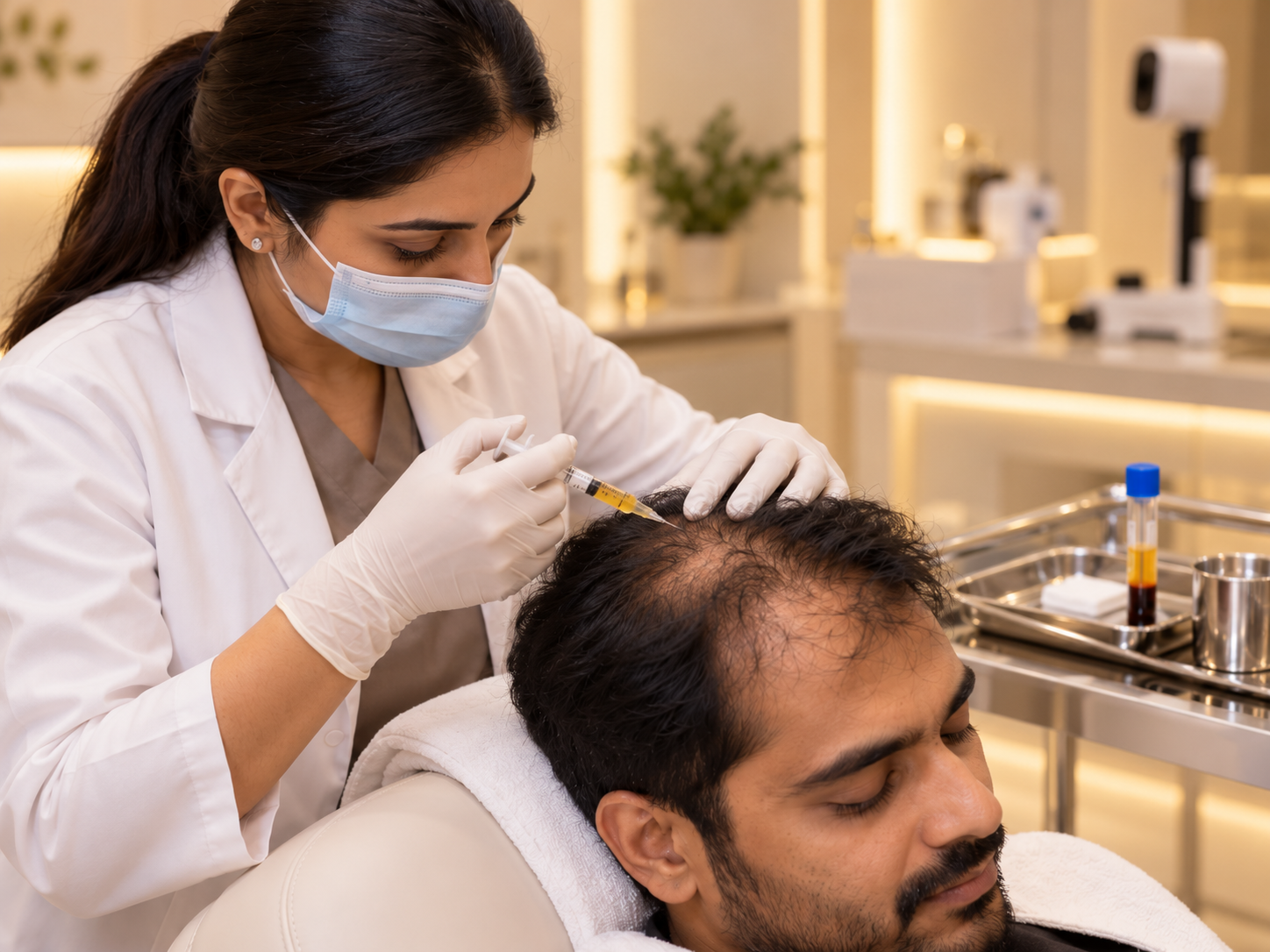
Step 5 — PRP Administration
PRP is delivered into selected areas of the scalp using controlled technique.
Step 6 — Post-Treatment Guidance
Aftercare instructions are provided and the next review or treatment session is planned.
A series of treatments may be recommended depending on the hair-loss pattern and response.
Frequently Asked Questions
What is PRP made from? PRP is prepared from the client’s own blood. Does PRP grow completely new hair? PRP is primarily used to support existing follicles. It cannot reliably recreate follicles in areas where they are no longer viable. Is PRP suitable for everyone with hair loss? No. Suitability depends on the cause, stage and pattern of hair loss. How many sessions are required? Treatment frequency varies. A course of sessions followed by periodic maintenance may be recommended according to response. When will I see improvement? Hair growth is slow. Shedding, quality and density changes are generally assessed over several months. Is PRP painful? Clients may experience brief discomfort during scalp injections. Comfort measures may be used according to the protocol. Is there downtime? Most clients return to routine activity relatively quickly, although temporary scalp tenderness, redness or pinpoint swelling may occur. Is PRP better than GFC? Neither should automatically be considered “better.” Treatment selection depends on individual suitability, protocol and clinical assessment. Can PRP work on completely bald areas? Response is limited when functioning follicles are no longer present. Does PRP permanently cure genetic hair loss? No. Pattern hair loss is usually a long-term condition and may require ongoing management.
You may also like
BookYourVisitatKAC
Healthy smiles starts with timely care.
Schedule your appointment today and let our team take care of the rest.