Hair Growth & Regrowth Support Program
A personalised, assessment-led hair restoration program designed to support existing follicles, improve scalp health and promote healthier hair growth using trichoscopy-guided planning, regenerative treatments and long-term maintenance where appropriate.
About Hair Growth & Regrowth Support Program
““Support active follicles. Improve hair quality. Build healthier growth over time.””
Hair Growth & Regrowth Support at KAC
Hair restoration begins with one important question:
Are the hair follicles still capable of producing stronger hair?
Not every area of hair loss has the same potential for regrowth.
Early thinning, miniaturised hairs and active follicles may respond differently from areas where follicles have been severely damaged or lost for a long period.
That is why Karthika’s Aesthetic Centre uses an assessment-first approach.
Before beginning treatment, we evaluate:
Pattern of hair loss
Hair density
Follicle appearance
Scalp condition
Hair-shaft quality
Duration of thinning
Family history
Nutritional factors
Relevant medical history
Previous treatments
The aim is to create a program that supports existing viable follicles and healthier hair-growth cycles, rather than promising impossible regrowth.
Possible Treatment Options
Depending on the assessment, the program may include:
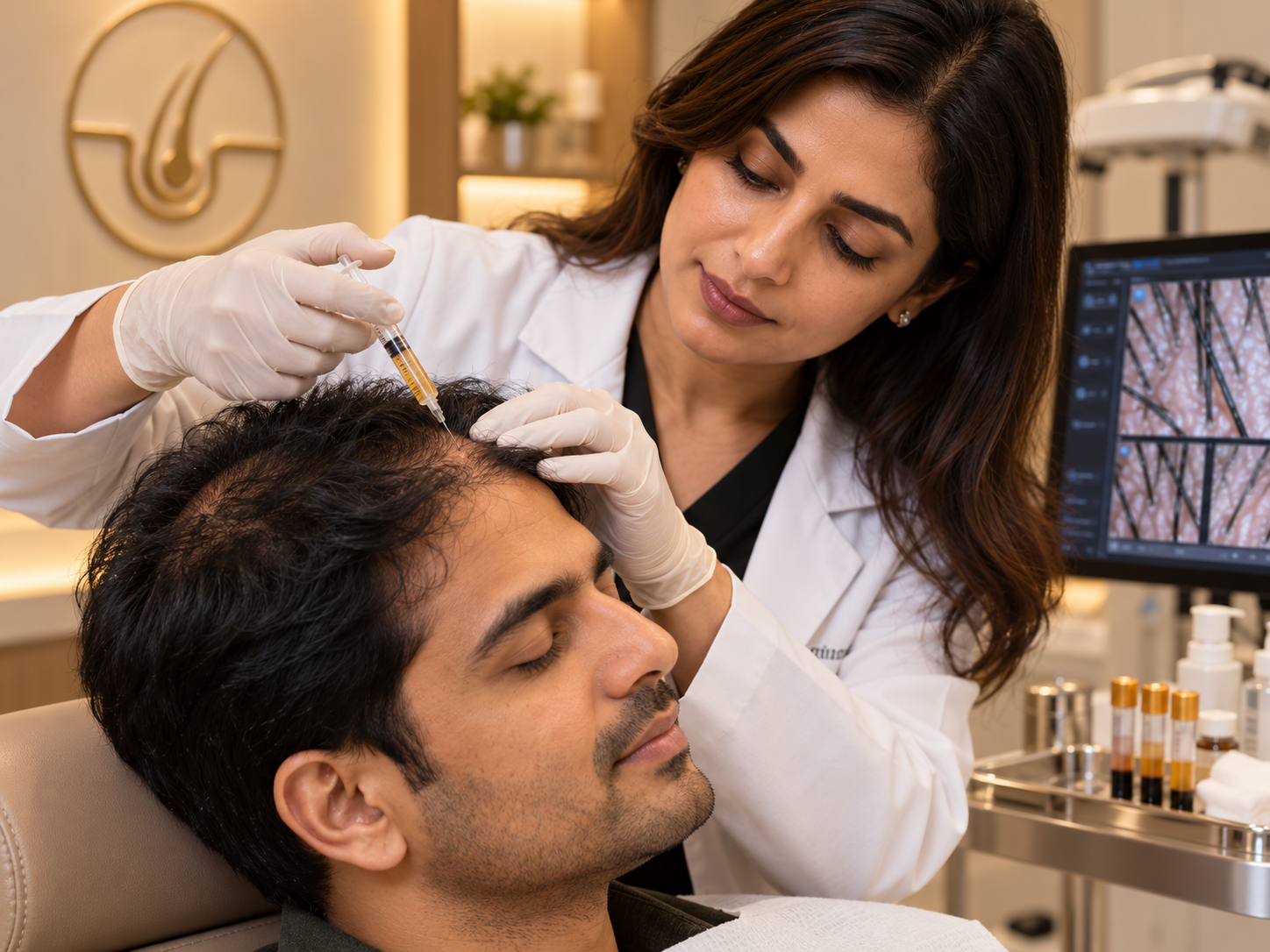
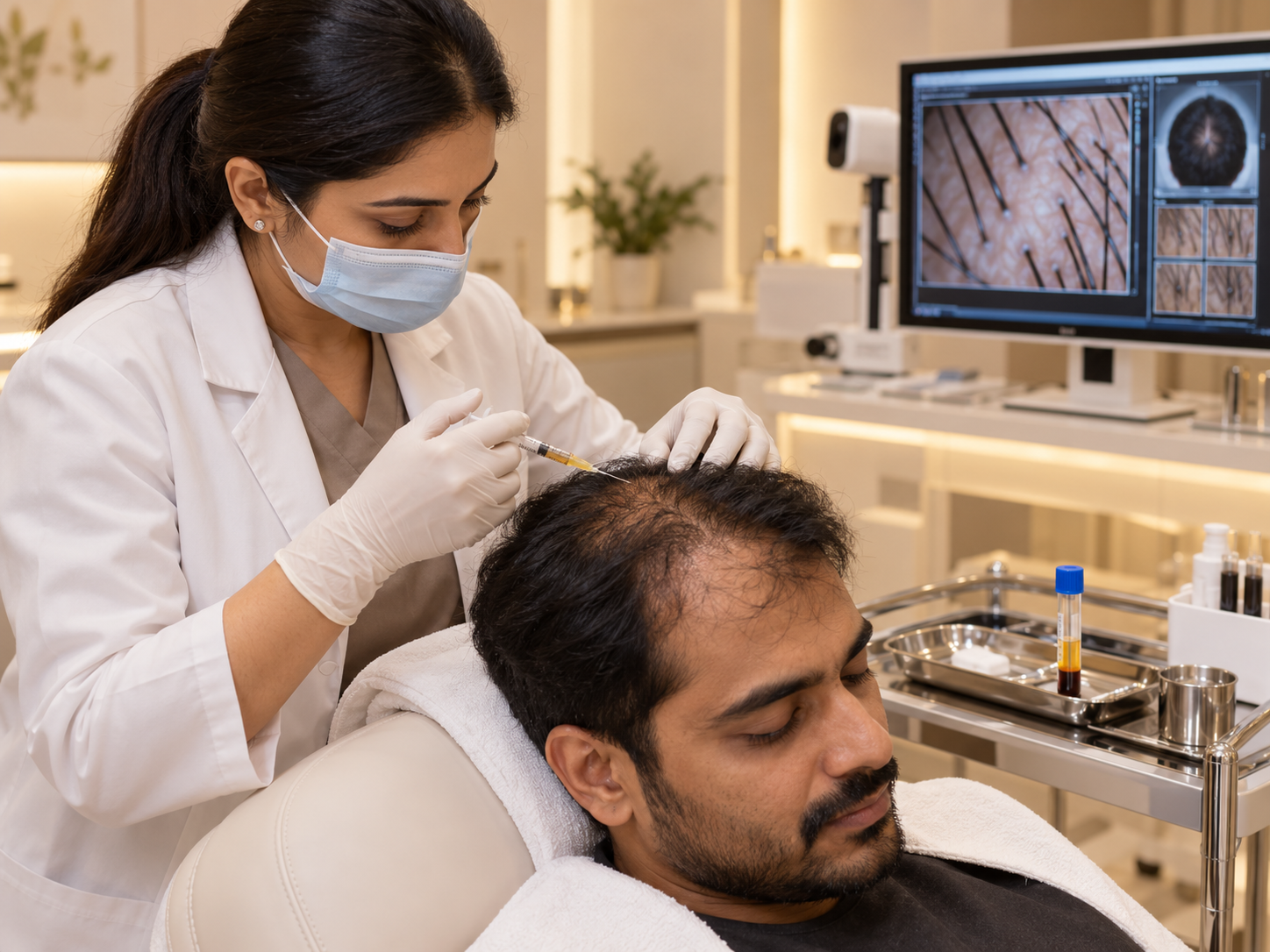
PRP Hair Therapy
Platelet-rich plasma may be considered in suitable hair-loss patterns to support existing follicles and hair-growth cycles.
GFC Hair Therapy
Growth-factor concentrate protocols may be selected for suitable clients as part of a structured restoration plan.
Hair Mesotherapy
Selected scalp-focused formulations may be used where clinically appropriate.
Scalp Therapy
Dandruff, excess oil, scaling or inflammation may need to be managed to create a healthier scalp environment.
Nutritional Support
Confirmed deficiencies such as iron, vitamin D, B12 or other nutritional factors may require correction.
Home-Care Program
Topical scalp products and appropriate hair-care routines may be incorporated into long-term management.
The exact combination depends on the diagnosis, follicle condition and individual treatment response.
Treatment Procedures and Details
What Do We Assess?
• Follicle Viability
Whether miniaturised or active follicles remain in the thinning area.
• Hair Density
Current density and areas showing progressive thinning.
• Hair Diameter
Variation in shaft thickness may indicate follicular miniaturisation.
• Growth Pattern
Frontal, temporal, crown or diffuse thinning.
• Scalp Condition
Inflammation, dandruff, oiliness and sensitivity.
• Shedding Pattern
Active shedding is distinguished from established thinning.
• Nutritional & Medical Factors
Possible deficiencies or systemic contributors are reviewed.
• Treatment History
Previous medications, PRP/GFC or other hair procedures are considered.
From there, the treatment strategy may follow:
Stabilise → Support → Stimulate → Monitor → Maintain
How the Program Works
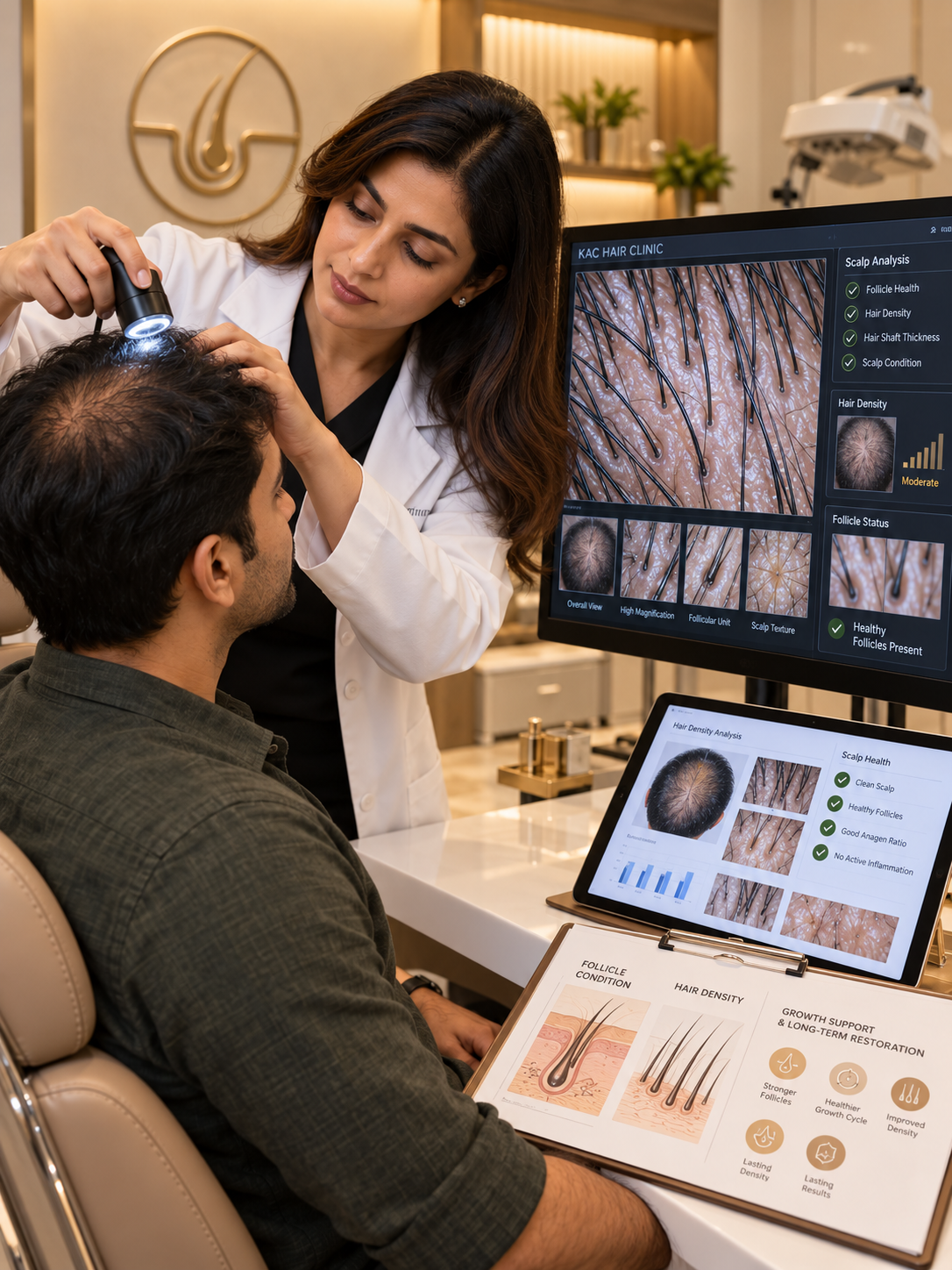
Step 1 — Hair & Scalp Assessment
Hair-loss history, density, thinning pattern and scalp condition are evaluated.
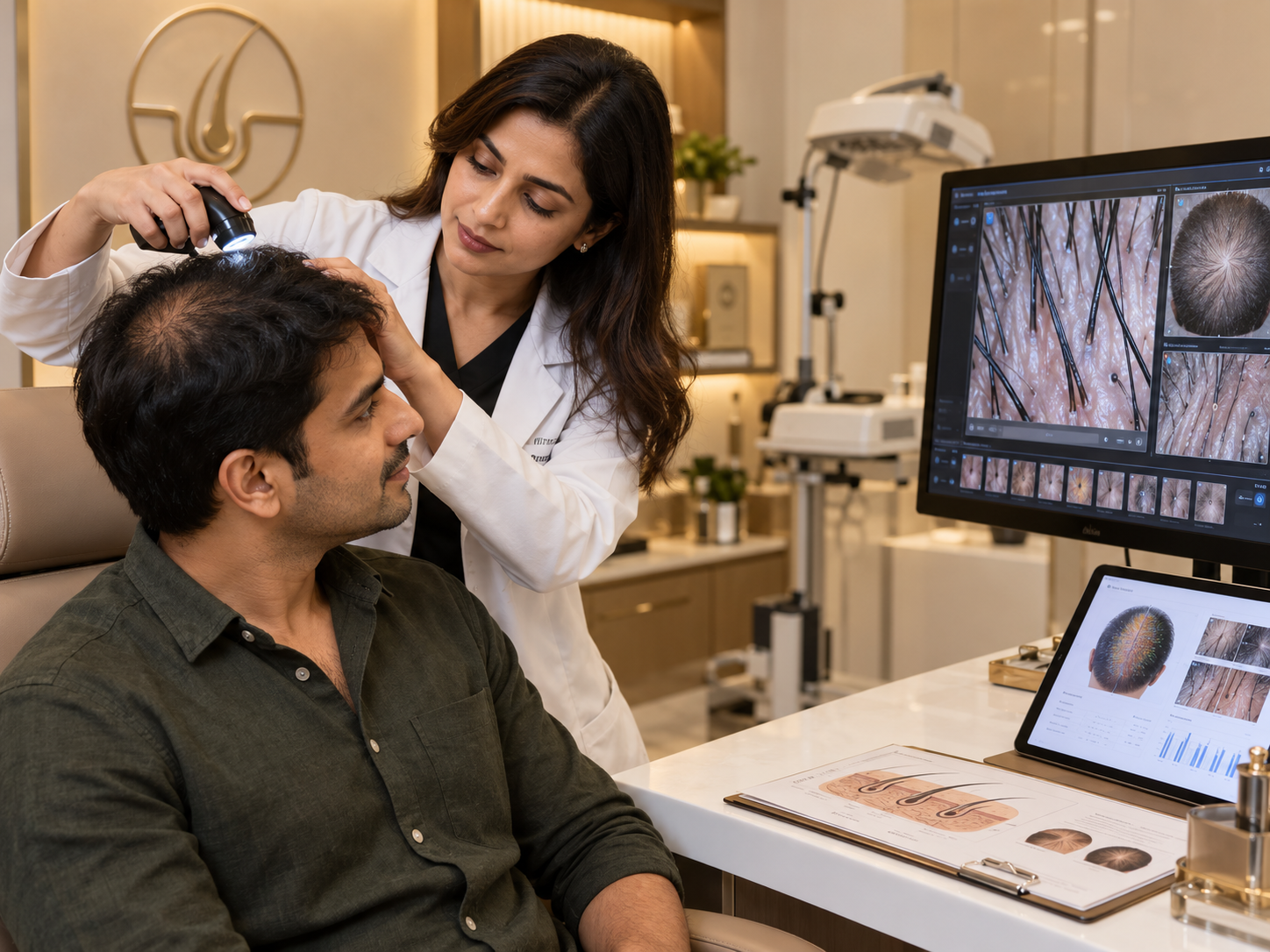
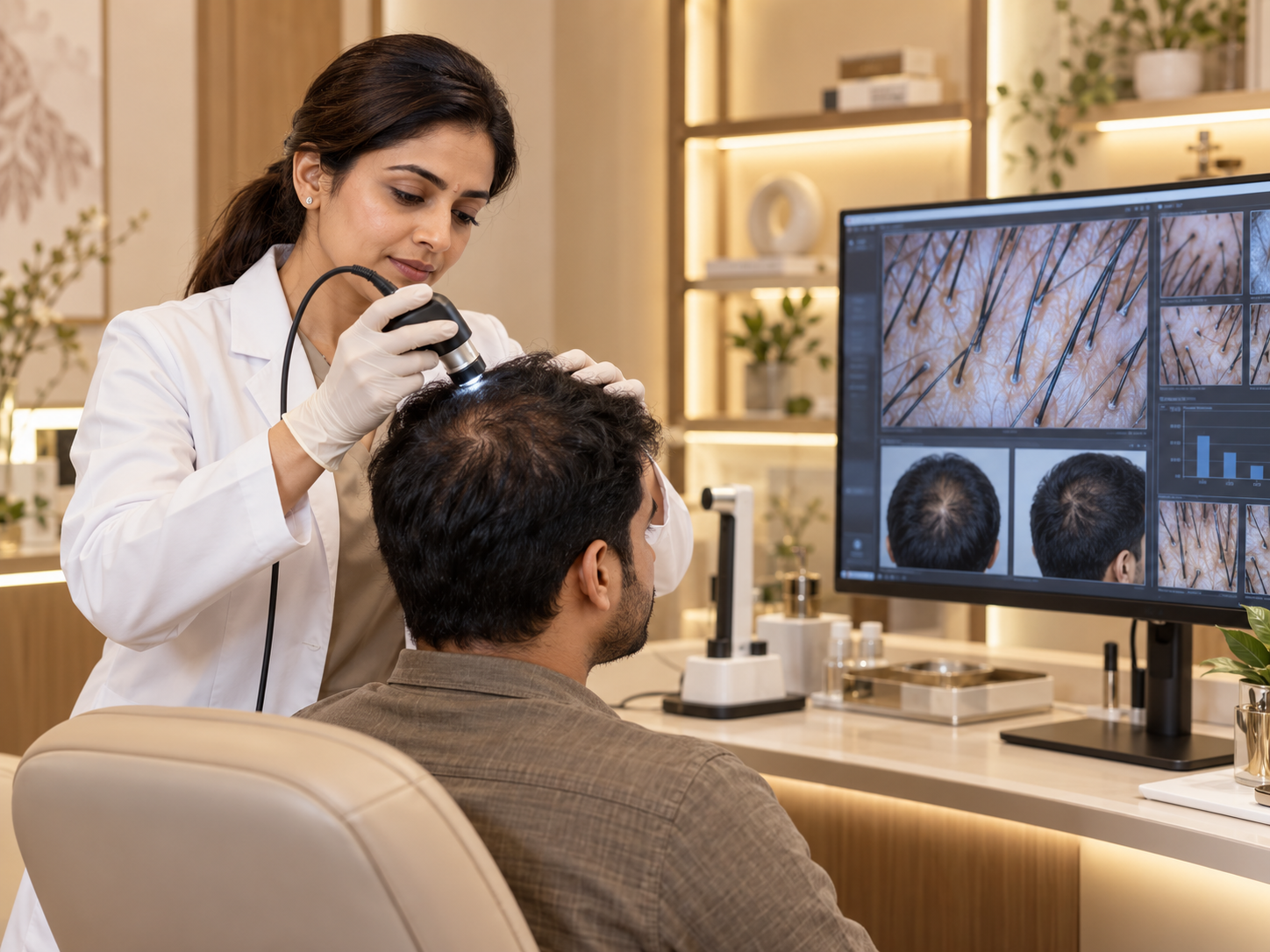
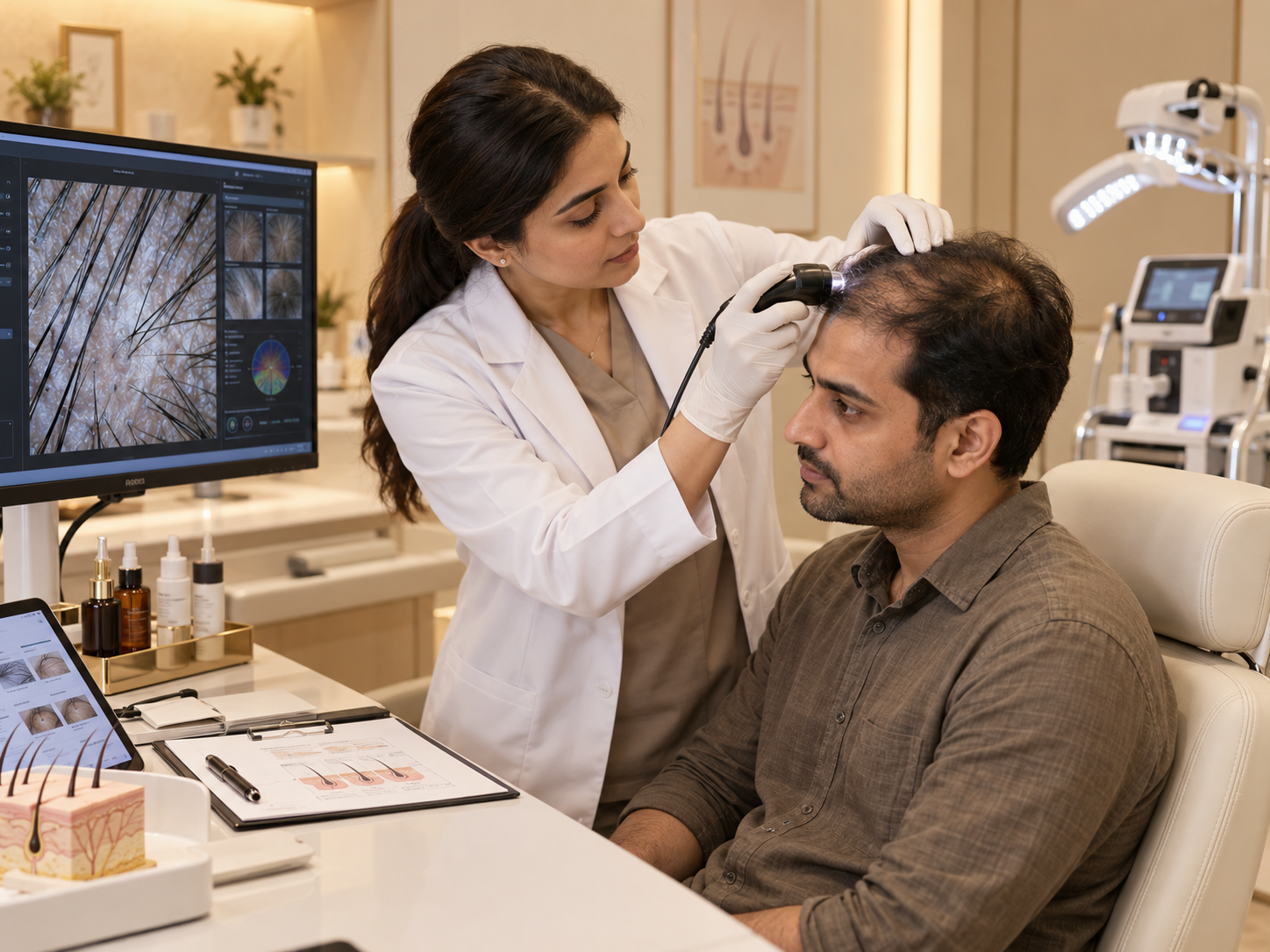
Step 2 — Trichoscopy
Magnified follicle imaging helps assess scalp health and hair-shaft characteristics.
Step 3 — Investigations Where Needed
Blood tests may be advised if iron deficiency, vitamin deficiency, thyroid dysfunction or another contributor is suspected.
Step 4 — Growth-Support Treatment
PRP, GFC, mesotherapy or another suitable protocol may be selected.
Step 5 — Scalp Optimisation
Dandruff, inflammation or scalp imbalance is treated where necessary.
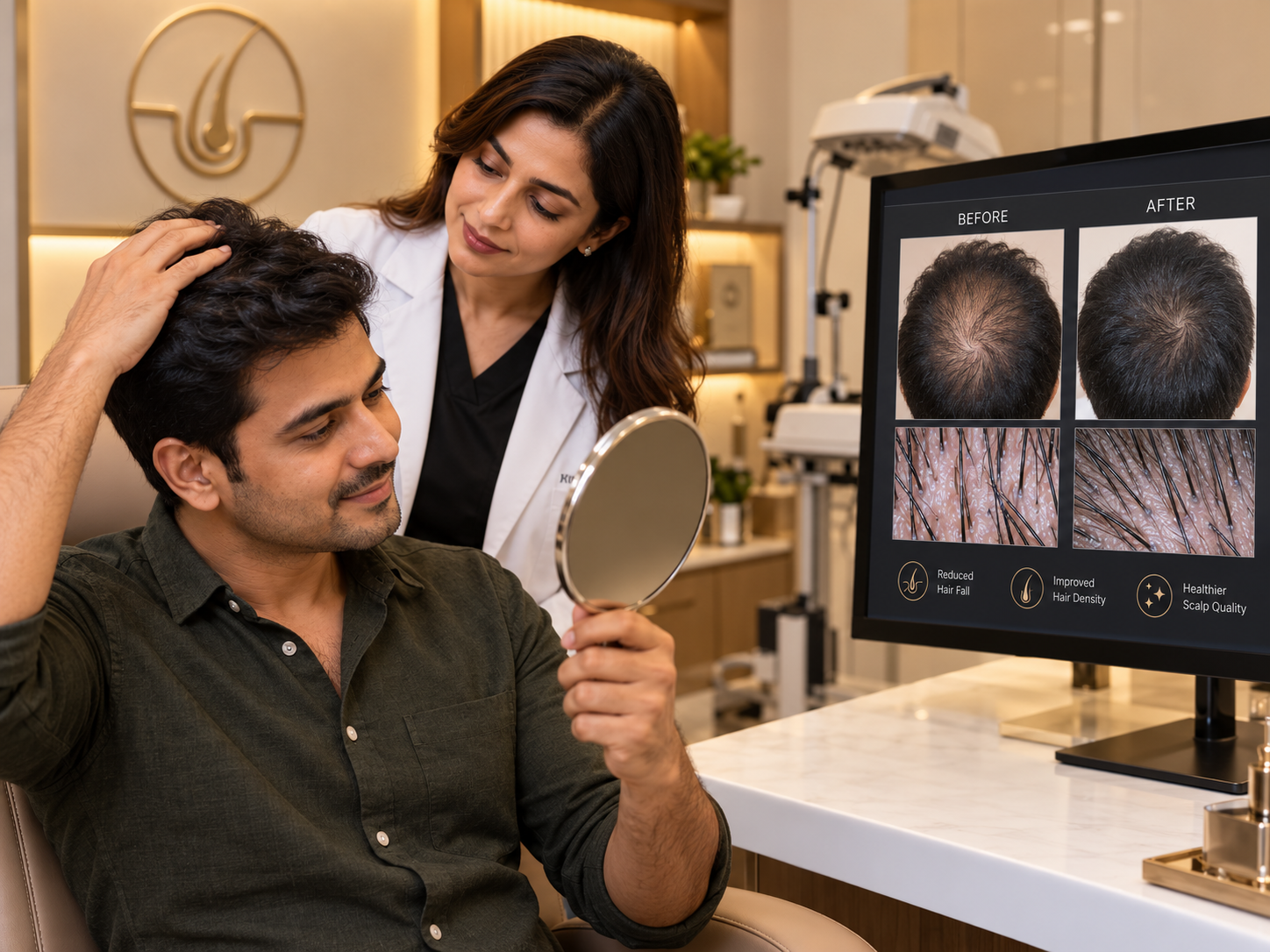
Step 6 — Progress Assessment
Hair density, shedding and hair quality are reviewed at planned intervals.
Step 7 — Maintenance
Hair-loss conditions frequently require ongoing maintenance rather than a short one-time course.
Frequently Asked Questions
Can you guarantee hair regrowth? No. Regrowth depends on the type and stage of hair loss, follicle viability and individual biological response. Can a completely bald area regrow hair? Areas with long-standing follicular loss are less likely to respond to non-surgical growth treatments and may require specialist or transplant assessment. How long does hair growth take? Hair grows slowly. Meaningful assessment usually requires several months rather than a few weeks. Is PRP or GFC better? Neither is universally better. Treatment choice should depend on hair-loss pattern, scalp condition, previous response and clinical suitability. Can treatment stop genetic hair loss permanently? Genetic hair loss is usually a long-term condition that requires ongoing management. Do I need trichoscopy? It is highly useful for documenting density, follicle appearance and progression, though it does not replace clinical diagnosis. Do nutritional deficiencies matter? Yes, when present. Correcting confirmed deficiencies can be an important part of hair-loss management. Does dandruff affect hair growth? Persistent inflammation or severe scalp disease can affect scalp health and may worsen shedding in some clients. When should I see a specialist? Sudden patchy loss, suspected scarring, significant inflammation, rapid unexplained shedding or complex medical causes require appropriate specialist evaluation.
You may also like
BookYourVisitatKAC
Healthy smiles starts with timely care.
Schedule your appointment today and let our team take care of the rest.