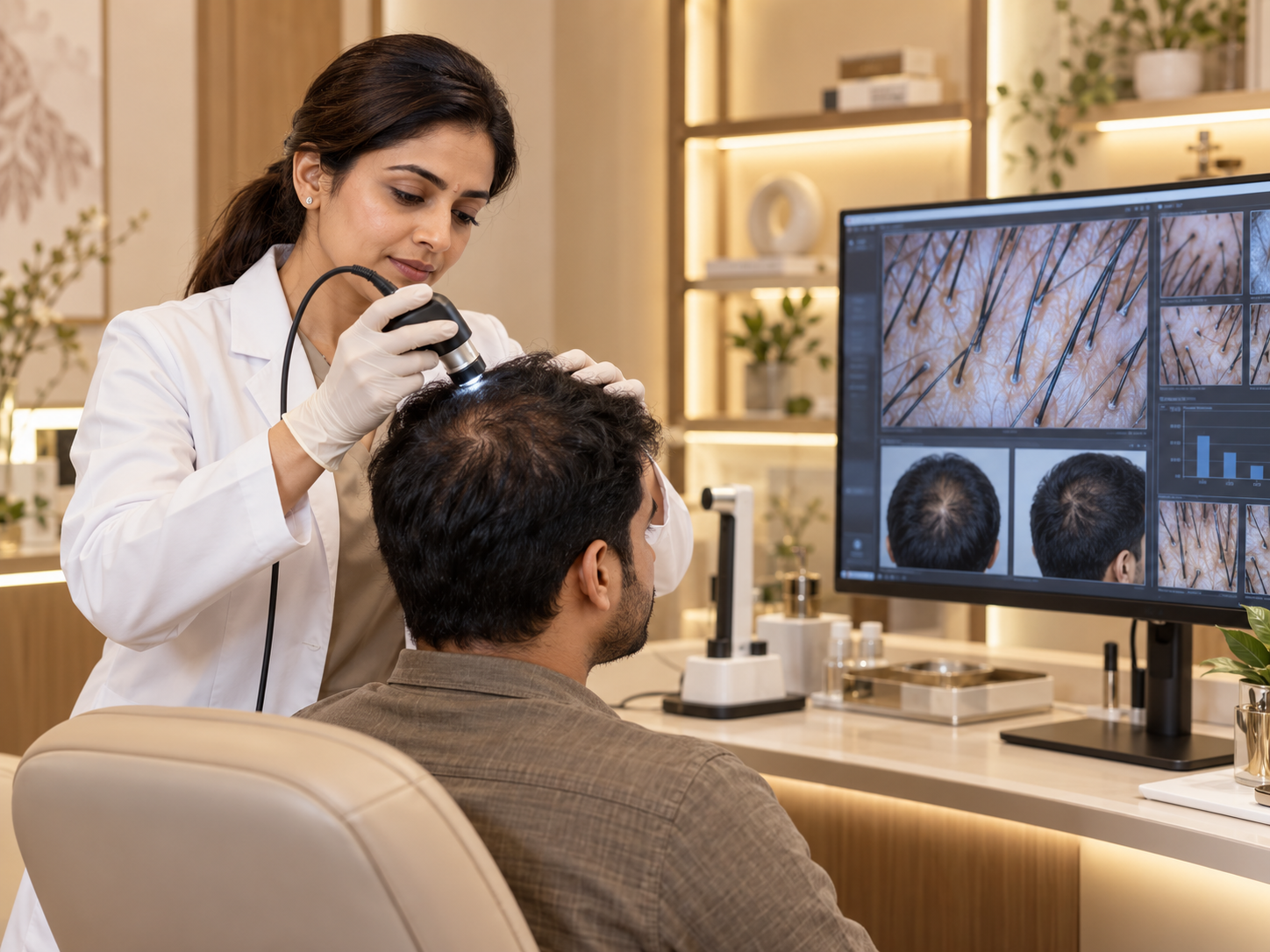
Hair Fall Assessment
A structured, doctor-guided evaluation of hair fall, scalp health and hair density using medical history, scalp examination, trichoscopy and investigations where indicated to help determine the most appropriate treatment pathway.
About Hair Fall Assessment
““Understand the cause before starting the treatment.””
Hair Fall & Scalp Assessment at KAC
Hair fall can have many different causes.
It may be related to:
Pattern hair loss
Nutritional deficiencies
Stress
Hormonal changes
Illness
Postpartum shedding
Scalp inflammation
Dandruff
Hair-shaft damage
Medication-related changes
Other medical conditions
Because the cause is not always obvious, beginning treatment without proper assessment can waste time and money.
At Karthika’s Aesthetic Centre, the first step is to understand why the hair is falling and what type of hair-loss pattern is present.
Our Hair Fall & Scalp Assessment may include:
Detailed history
Hair-fall pattern evaluation
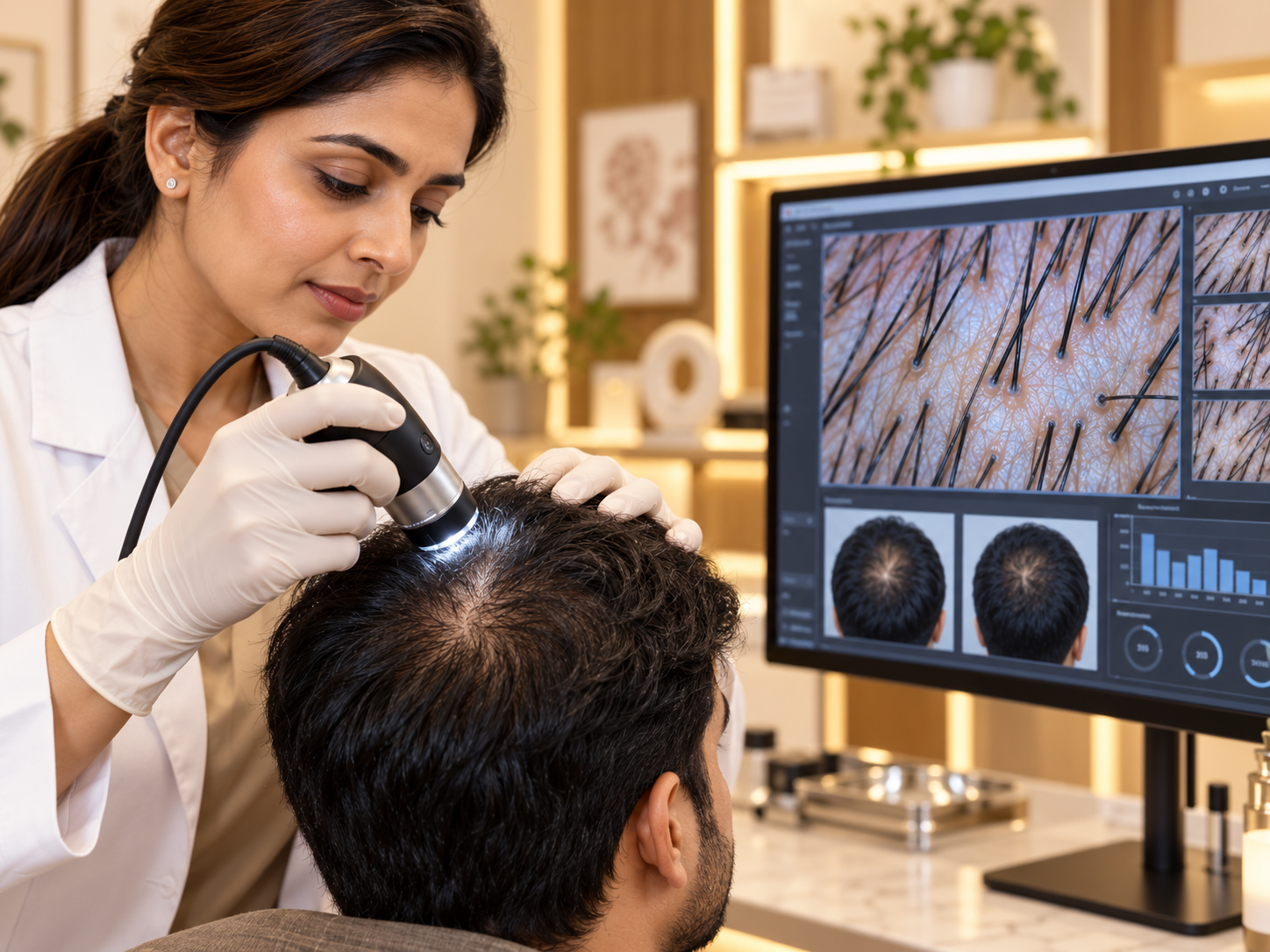
Scalp examination
Hair-density assessment
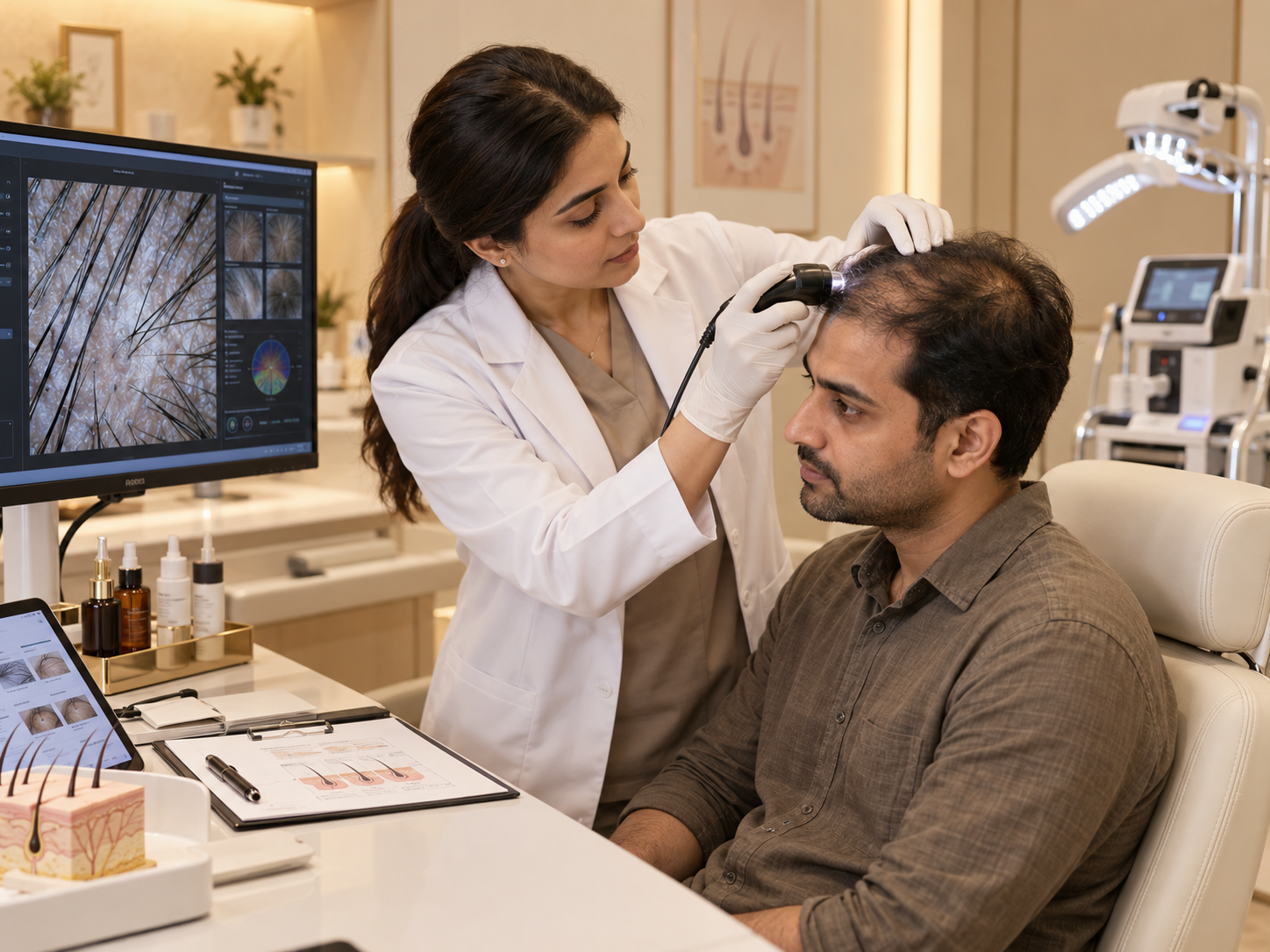
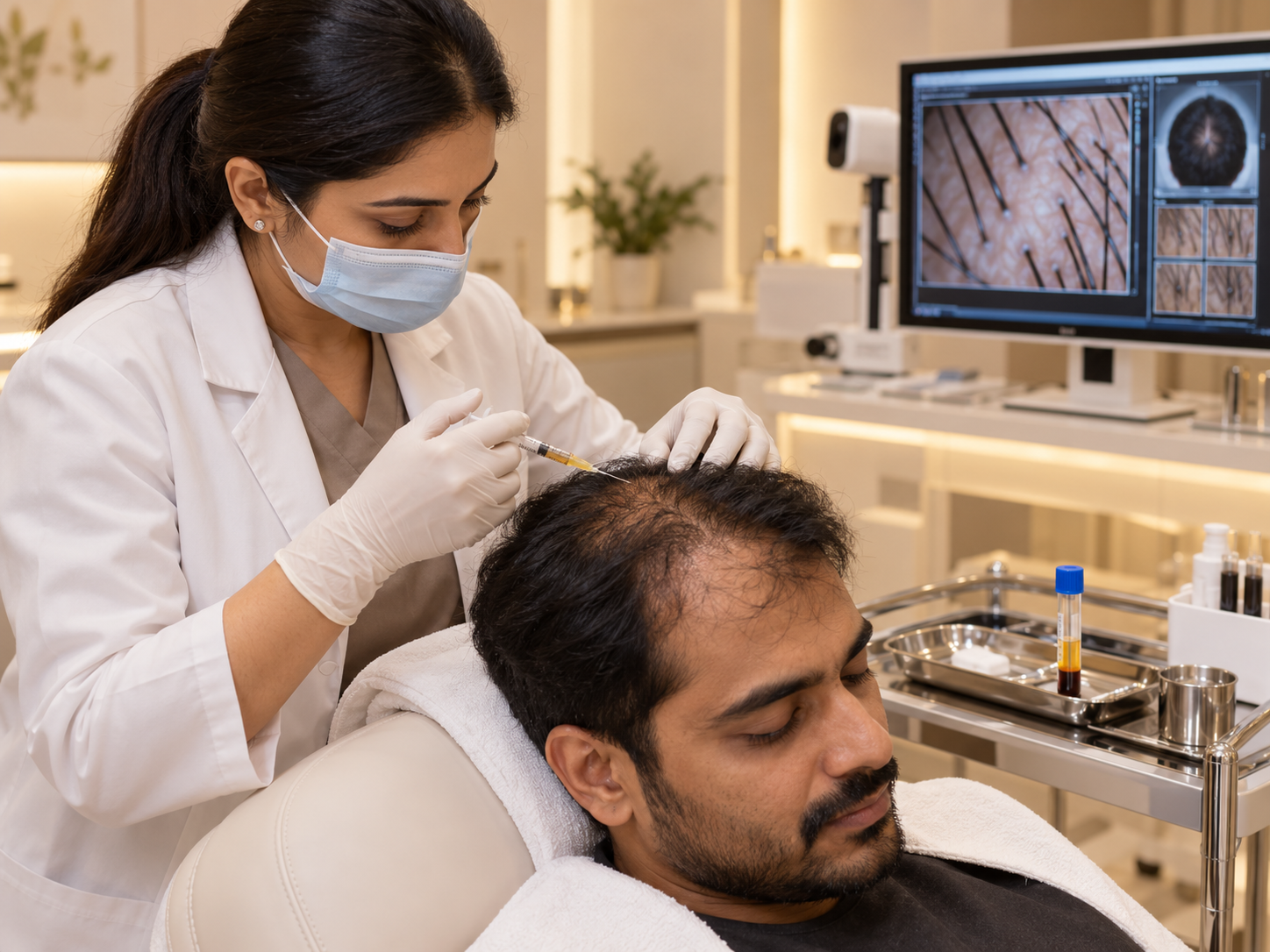
Trichoscopy / magnified imaging
Hair-shaft evaluation
Dandruff and scalp-condition assessment
Review of diet and lifestyle
Review of previous treatments
Blood investigations where clinically indicated
The objective is to build a treatment plan around the underlying concern rather than starting a standard package for everyone.


Treatment Procedures and Details
What We Assess
• Hair Fall Pattern
Diffuse shedding, frontal thinning, crown thinning or patchy loss.
• Hair Density
Overall density and visible areas of reduced coverage.
• Follicle Characteristics
Trichoscopy may help visualise follicular openings, hair-shaft variation and scalp condition.
• Scalp Health
Dandruff, oiliness, scaling, inflammation and sensitivity.
• Hair Shaft
Breakage and hair-quality changes are assessed.
• Duration & Progression
Sudden versus gradual hair loss can point toward different causes.
• Family History
Pattern hair loss often has a hereditary component.
• Lifestyle & Nutrition
Diet, stress, sleep and recent illness may contribute to shedding.
• Medical History
Thyroid problems, anaemia, medications, hormonal issues and other conditions may influence hair growth.
Investigations — Where Indicated
Depending on history and examination, selected blood tests may be recommended.
These can include evaluation of:
Haemoglobin / CBC
Ferritin / iron status
Vitamin D
Vitamin B12
Thyroid function
Other tests based on symptoms and medical history
Not every client needs the same panel.
Investigations should be chosen according to the clinical picture.
What Happens During the Assessment?
Step 1 — Consultation
We review:
When the hair fall began
Whether it is sudden or progressive
Recent illness or stress
Pregnancy or postpartum history where relevant
Diet
Medications
Previous hair treatments
Family history
Step 2 — Scalp Examination
The scalp is examined for:
Thinning pattern
Scaling
Dandruff
Redness
Follicular changes
Hair breakage
Step 3 — Trichoscopy
Magnified imaging may be used to evaluate the scalp and hair follicles more closely.
Step 4 — Investigation Planning
If the history suggests possible nutritional, hormonal or medical factors, relevant tests may be advised.
Step 5 — Treatment Planning
Depending on findings, the plan may include:
Scalp therapy
Dandruff management
Professional hair-growth protocols
PRP / GFC where suitable
Mesotherapy or topical-support protocols where appropriate
Nutritional correction
Home-care products
Lifestyle modification
Medical referral where necessary
When Referral Is Important
This is an important credibility section.
Clients may require dermatology or specialist evaluation if there is:
Sudden patchy hair loss
Scarring or loss of follicular openings
Significant scalp inflammation
Persistent scalp pain
Rapid unexplained hair loss
Suspected autoimmune hair disease
Complex hormonal or medical causes
Hair loss that does not respond as expected
KAC should never market every case as a PRP or GFC case.
That would undermine the “investigation first” positioning.
Frequently Asked Questions
How much hair fall is normal? Daily shedding varies between individuals. What matters more is a noticeable change from your normal pattern or progressive thinning. Do I need blood tests? Not everyone does. Tests are recommended when the history or examination suggests a possible underlying deficiency or medical factor. What is trichoscopy? It is magnified digital examination of the scalp and hair that can provide additional information about hair density, follicles and scalp condition. Can trichoscopy diagnose every type of hair loss? No. It supports clinical assessment but does not replace medical history, examination or specialist evaluation when required. Will I receive treatment on the same day? If the cause is reasonably clear and treatment is appropriate, a plan may be discussed. In some cases, investigations should be completed first. Is PRP or GFC necessary for everyone? No. These treatments are appropriate only for selected clients. Can nutritional deficiencies cause hair fall? Yes, deficiencies such as iron deficiency can contribute to shedding, but treatment should be based on confirmed findings rather than assumptions.
You may also like
BookYourVisitatKAC
Healthy smiles starts with timely care.
Schedule your appointment today and let our team take care of the rest.