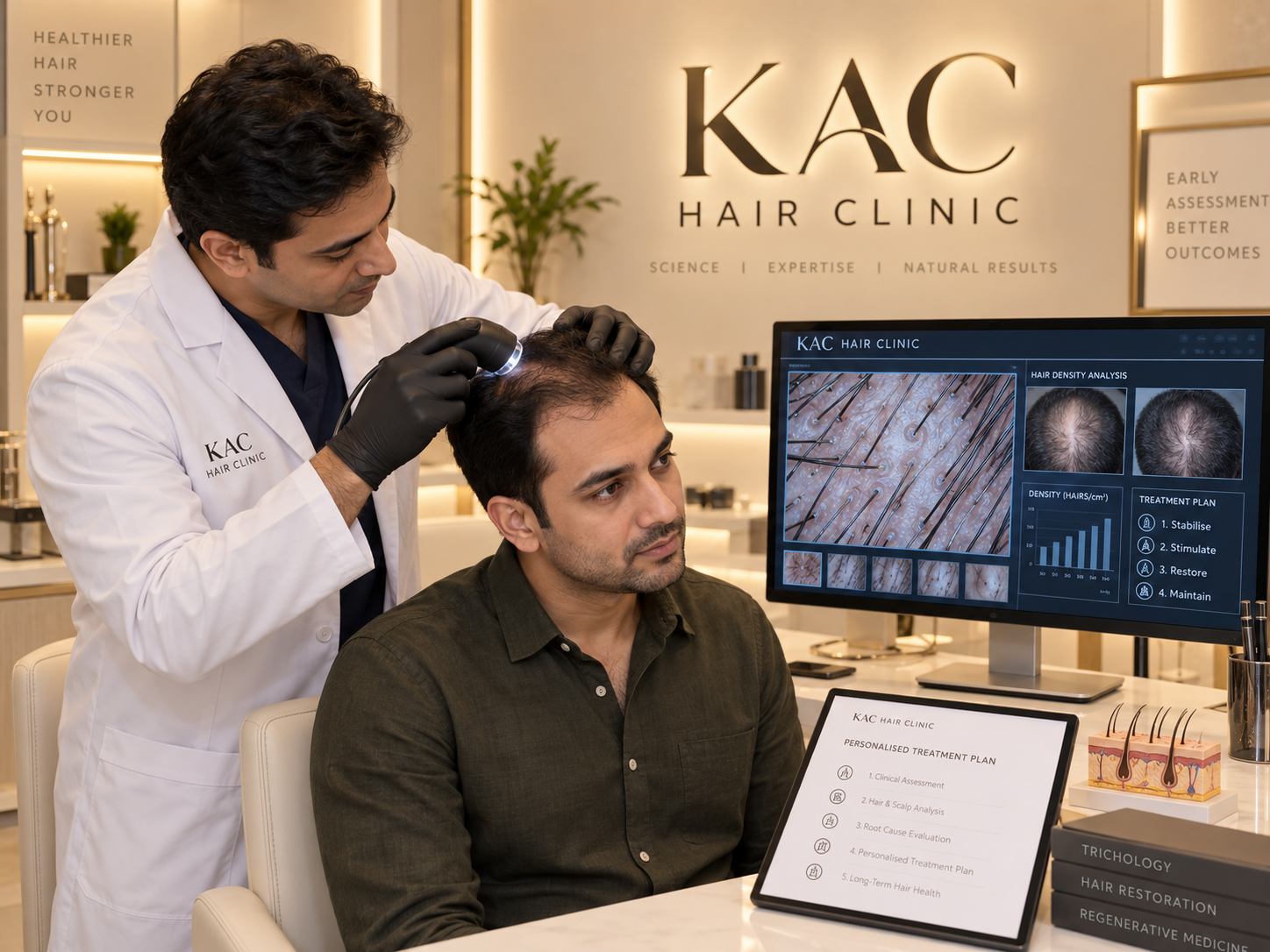
Male Hair Loss & Density Restoration Program
A personalised, assessment-led program for men experiencing receding hairlines, crown thinning, reduced density or increased shedding, combining clinical examination, digital trichoscopy, investigation where indicated and carefully selected hair-restoration treatments.
About Male Hair Loss & Density Restoration Program
““Assess early. Protect existing follicles. Support healthier density.””
Male Hair Loss Treatment at KAC
Hair loss in men is extremely common, but not every case follows the same pattern or requires the same treatment.
Some men first notice:
Receding temples
Changes in the frontal hairline
Crown thinning
Increased scalp visibility
Reduced overall density
Hair becoming progressively finer
Increased shedding
One of the most common causes is male-pattern hair loss, where genetically susceptible follicles gradually become smaller and produce finer hair over time.
However, increased shedding may also be associated with:
Stress
Recent illness or fever
Nutritional deficiencies
Major weight loss
Thyroid-related factors
Certain medications
Scalp inflammation
Dandruff
Other medical conditions
This is why KAC Hair Clinic follows an assessment-first approach rather than automatically recommending PRP, GFC or another procedure.


Treatment Procedures and Details
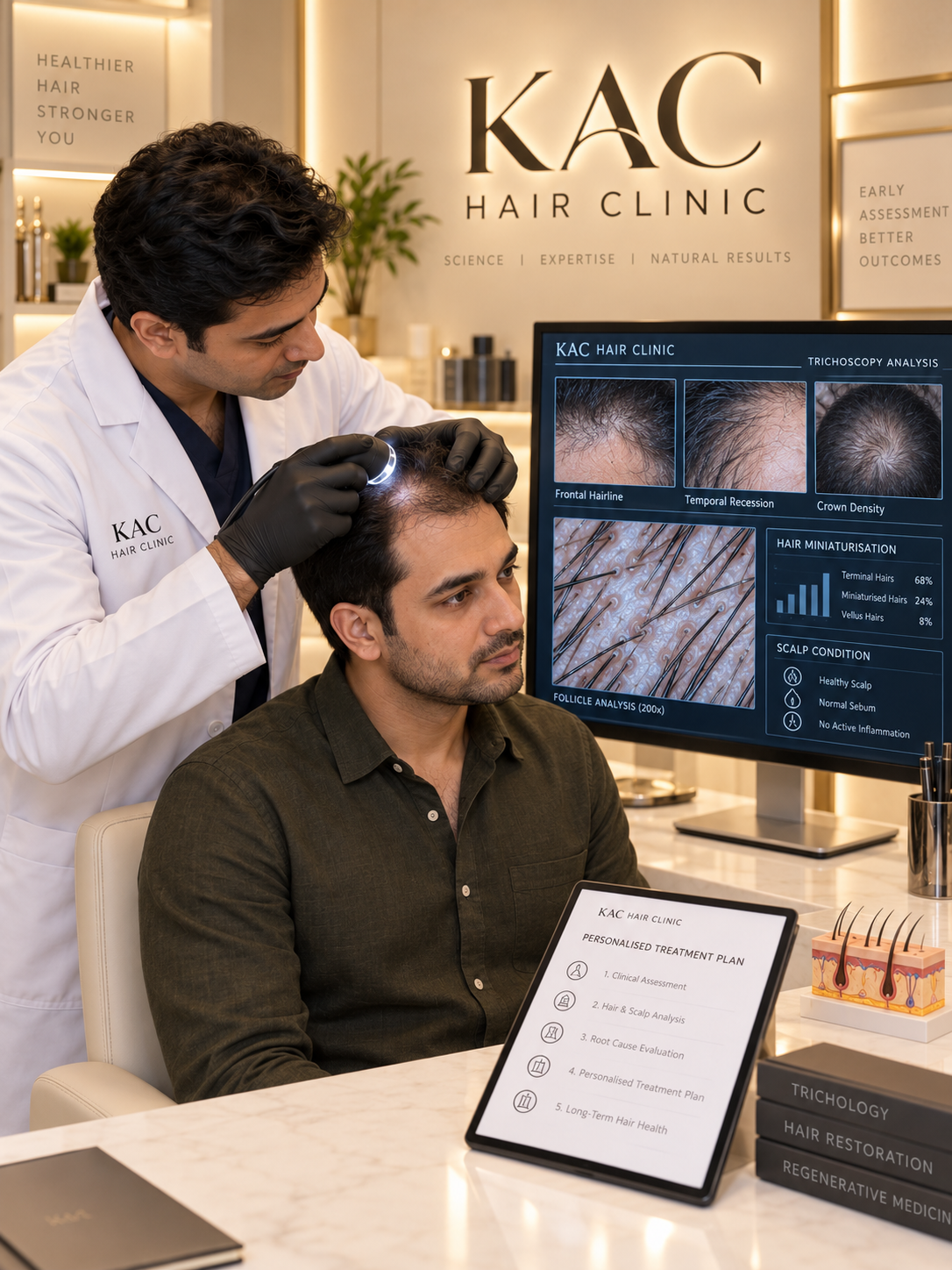
What Do We Assess?
• Frontal Hairline
Recession, temple changes and density are evaluated.
• Crown Density
Crown thinning is documented and monitored.
• Hair Miniaturisation
Digital trichoscopy may help identify variation in hair-shaft diameter and progressively finer hairs.
• Follicle Status
Areas with active or miniaturised follicles are differentiated from long-standing areas with very limited follicular activity.
• Hair Density
Overall coverage and scalp visibility are assessed.
• Scalp Health
Dandruff, scaling, inflammation, oiliness and sensitivity are reviewed.
• Family History
Genetic pattern hair loss frequently runs in families.
• Rate of Progression
Early progressive thinning should be distinguished from long-standing stable loss.
• Shedding History
Sudden diffuse shedding may indicate a different process from classical pattern thinning.
From there, the plan may follow:
Assess → Stabilise → Support → Stimulate → Monitor → Maintain
Investigations — Where Indicated
A man with a classic pattern of gradual frontal and crown thinning does not automatically require a large blood-test panel.
Investigations become more relevant when there is:
Sudden or excessive diffuse shedding
Unexplained rapid progression
Fatigue or nutritional concerns
Restrictive dieting
Recent illness
Other clinical symptoms
Depending on the history, selected investigations may include:
CBC
Ferritin / iron status
Thyroid function
Vitamin D
Vitamin B12
Other tests where clinically indicated
That distinction strengthens KAC’s investigation-first philosophy—investigate when there is a reason, not simply because someone has hair loss.
Possible Treatment Options
Depending on the assessment, the program may include:
PRP Hair Therapy
May be considered for selected men with remaining viable follicles and early-to-moderate thinning.
GFC Hair Therapy
May be selected as a growth-factor–focused scalp treatment in suitable cases.
Hair Mesotherapy
Selected scalp-support formulations may be incorporated where appropriate.
Dandruff & Scalp Treatment
Scaling, inflammation and scalp imbalance should be addressed if present.
Nutritional Correction
Confirmed deficiencies should be corrected appropriately.
Home-Care & Long-Term Support
Suitable scalp products and maintenance strategies may be recommended.
Medical / Specialist Management
Where appropriate, clients may also be advised regarding evidence-based medical management or specialist evaluation.
The treatment should follow the diagnosis and follicle condition—not the package price.
Step 1 — Consultation
We review when the hair loss started, family history, rate of progression, shedding and previous treatments.
Step 2 — Hairline & Crown Assessment
The frontal hairline, temples, mid-scalp and crown are examined.
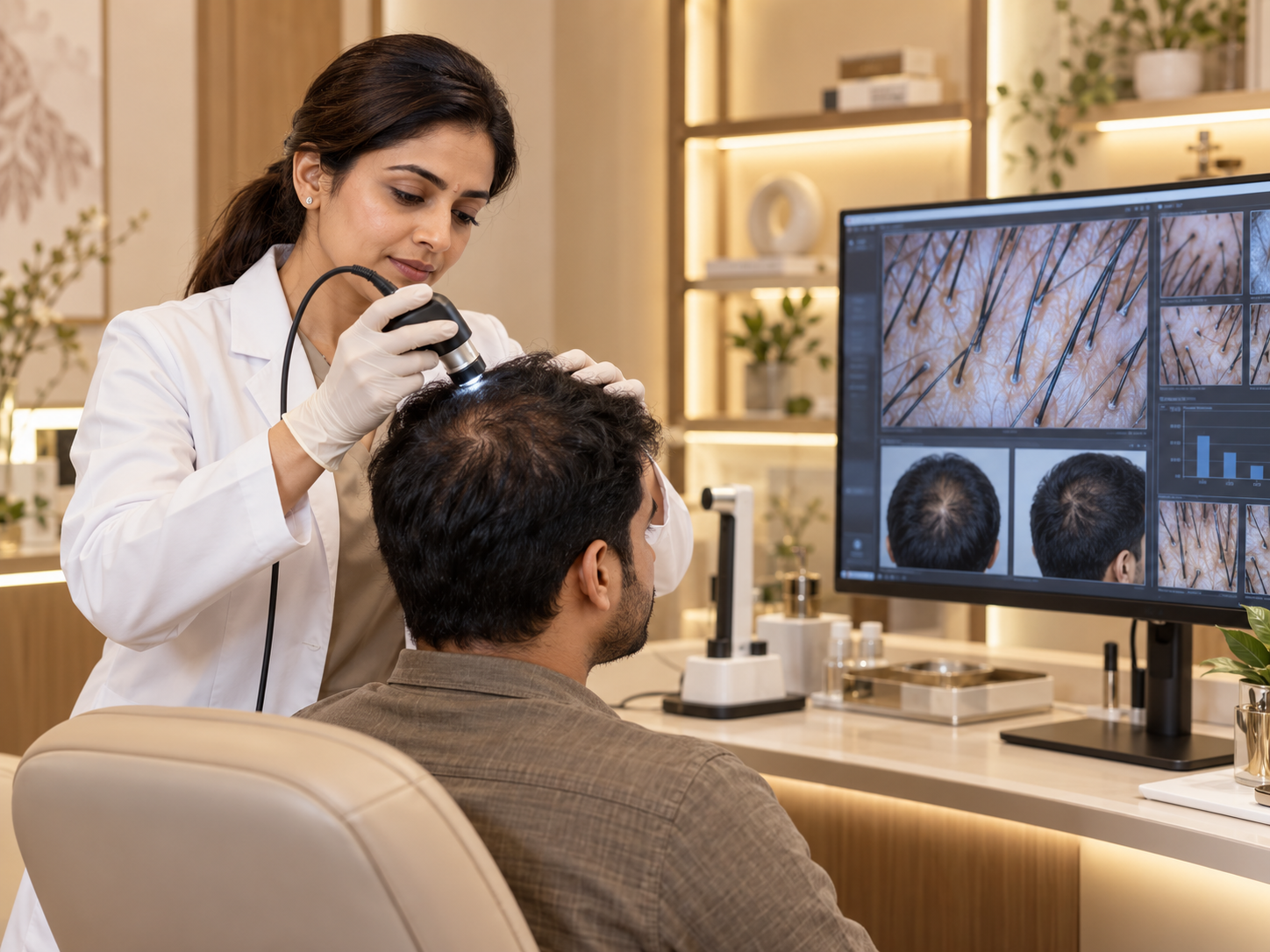
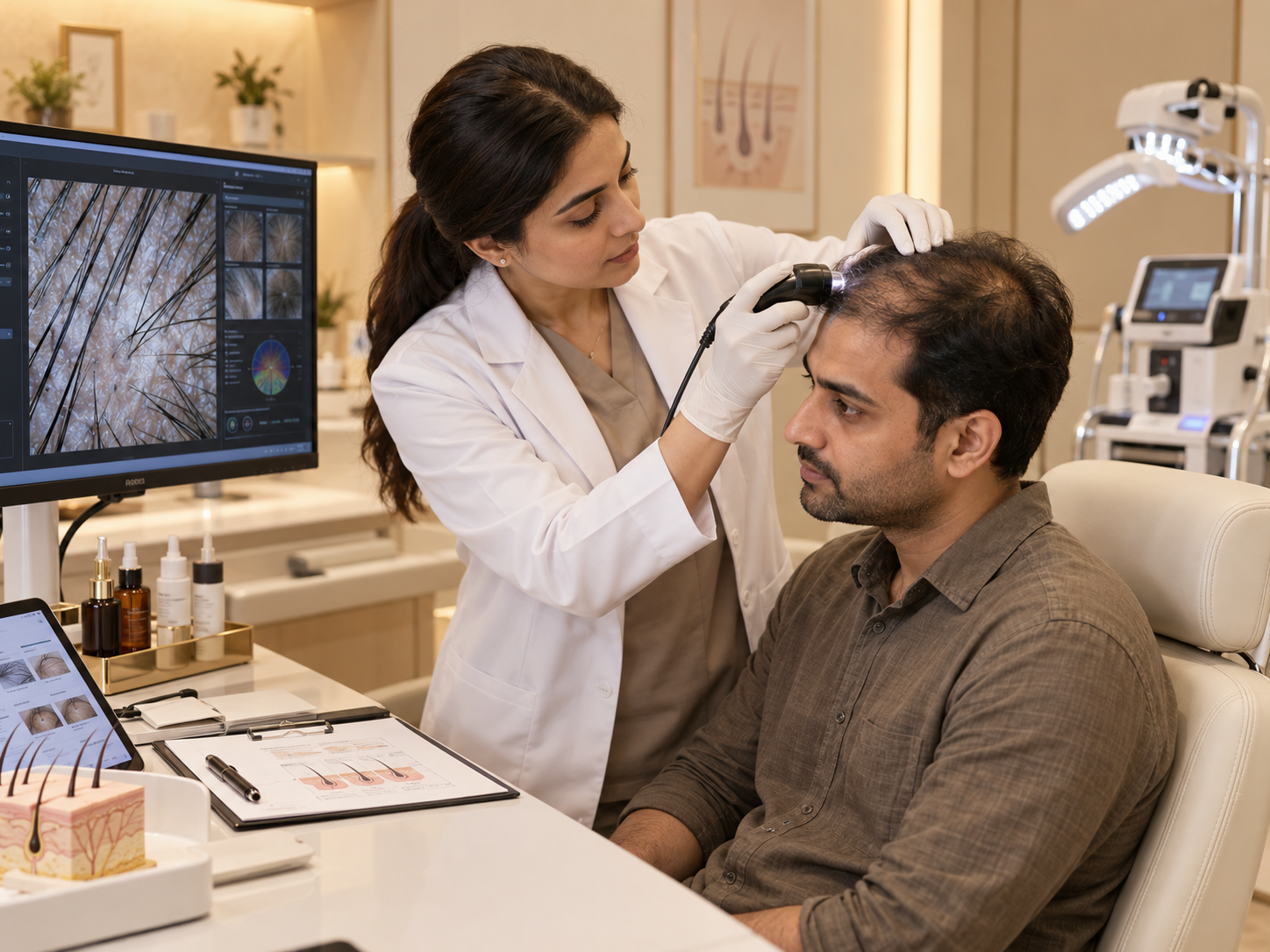
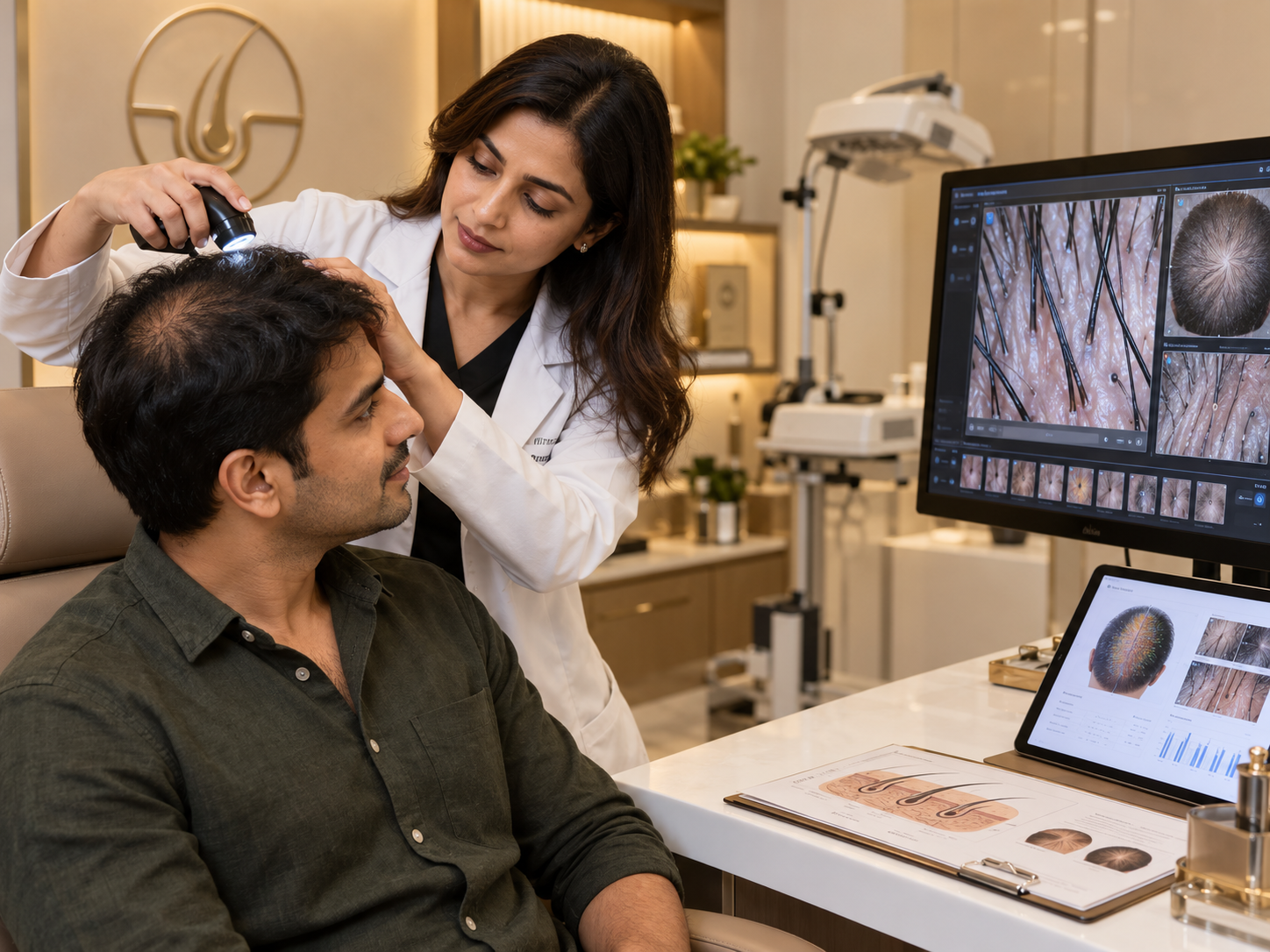
Step 3 — Digital Trichoscopy
Magnified scalp imaging helps document density, hair-shaft variation and follicle condition.
Step 4 — Investigation Where Needed
Selected tests may be advised if the pattern is unusual or diffuse shedding suggests an additional cause.
Step 5 — Personalised Treatment Planning
Depending on findings, treatment may include:
PRP
GFC
Mesotherapy
Scalp treatment
Nutritional correction
Home-care support
Referral or medical management where appropriate
Step 6 — Progress Monitoring
Standardised photographs and/or trichoscopy are used to track change.
Step 7 — Maintenance
Genetic male-pattern thinning usually requires ongoing management rather than a short “cure.”
Important Clinical Positioning
This page should clearly explain one fact:
Early treatment generally gives you more to work with.
When follicles are still present but progressively miniaturising, there may be greater potential to support them.
When an area has been completely bald for a long time and functioning follicles are no longer present, PRP, GFC or mesotherapy should not be marketed as a way to recreate those follicles.
Those clients may require a different discussion, including specialist or hair-transplant evaluation where appropriate.
That statement makes KAC look far more credible than clinics advertising injections for every stage of baldness.
Frequently Asked Questions
Is male hair loss always genetic? No. Genetic pattern hair loss is common, but sudden shedding, nutritional problems, illness and scalp conditions can also contribute. What does a receding hairline usually indicate? Gradual temple and frontal recession is commonly seen in male-pattern hair loss, but an assessment is required before assuming the cause. Can PRP or GFC restore a completely bald hairline? They cannot reliably recreate follicles that are no longer viable. Can crown thinning improve? Selected early-to-moderate crown thinning with viable follicles may respond to appropriate treatment, but individual response varies. Do all men need PRP? No. PRP should be recommended only when clinically appropriate. Is GFC better than PRP? Not for every person. Treatment selection should depend on follicle condition, previous response and clinical suitability. Can male-pattern hair loss be permanently cured? It is generally a progressive condition requiring long-term management rather than a one-time cure. When will I see improvement? Hair growth is slow. Progress should usually be evaluated over several months. Do I need blood tests? Not necessarily. They are more useful when the history suggests additional causes such as diffuse shedding or nutritional problems. When should I see a specialist? Sudden patchy hair loss, scalp scarring, pain, significant inflammation, rapid unexplained loss or advanced baldness requiring surgical options should receive appropriate specialist evaluation.
You may also like
BookYourVisitatKAC
Healthy smiles starts with timely care.
Schedule your appointment today and let our team take care of the rest.