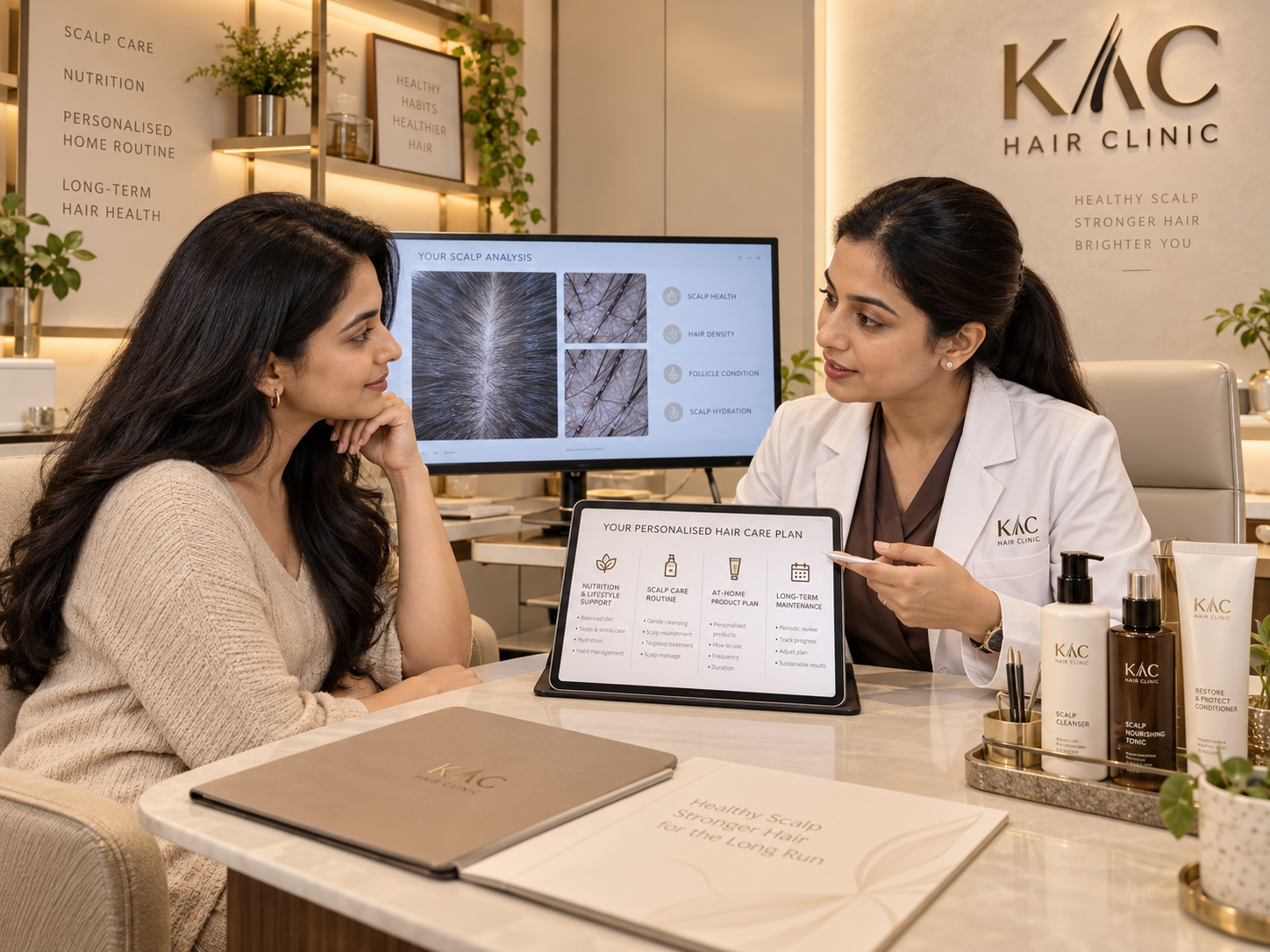
Hair Nutrition & Home-Care Support Program
A personalised support program designed to optimise nutrition, scalp care, hair-care habits and home-use products according to the client’s hair-loss pattern, scalp condition and treatment plan.
About Hair Nutrition & Home-Care Support Program
“Hair Nutrition & Home-Care Support Program”
Hair Nutrition & Home-Care Support at KAC
Hair health is influenced by more than clinic procedures.
Daily factors such as:
Protein intake
Iron status
Vitamin deficiencies
Recent weight loss
Stress
Sleep
Hair-washing habits
Scalp condition
Heat styling
Chemical treatments
Product selection
can influence shedding, breakage and overall hair quality.
At Karthika’s Aesthetic Centre, our Hair Nutrition & Home-Care Support Program is designed to complement the client’s clinical hair-treatment plan.
The objective is not to prescribe unnecessary supplements or promise that diet alone will reverse genetic hair loss.
Instead, we assess whether there are correctable nutritional, scalp or hair-care factors that may be affecting hair health.
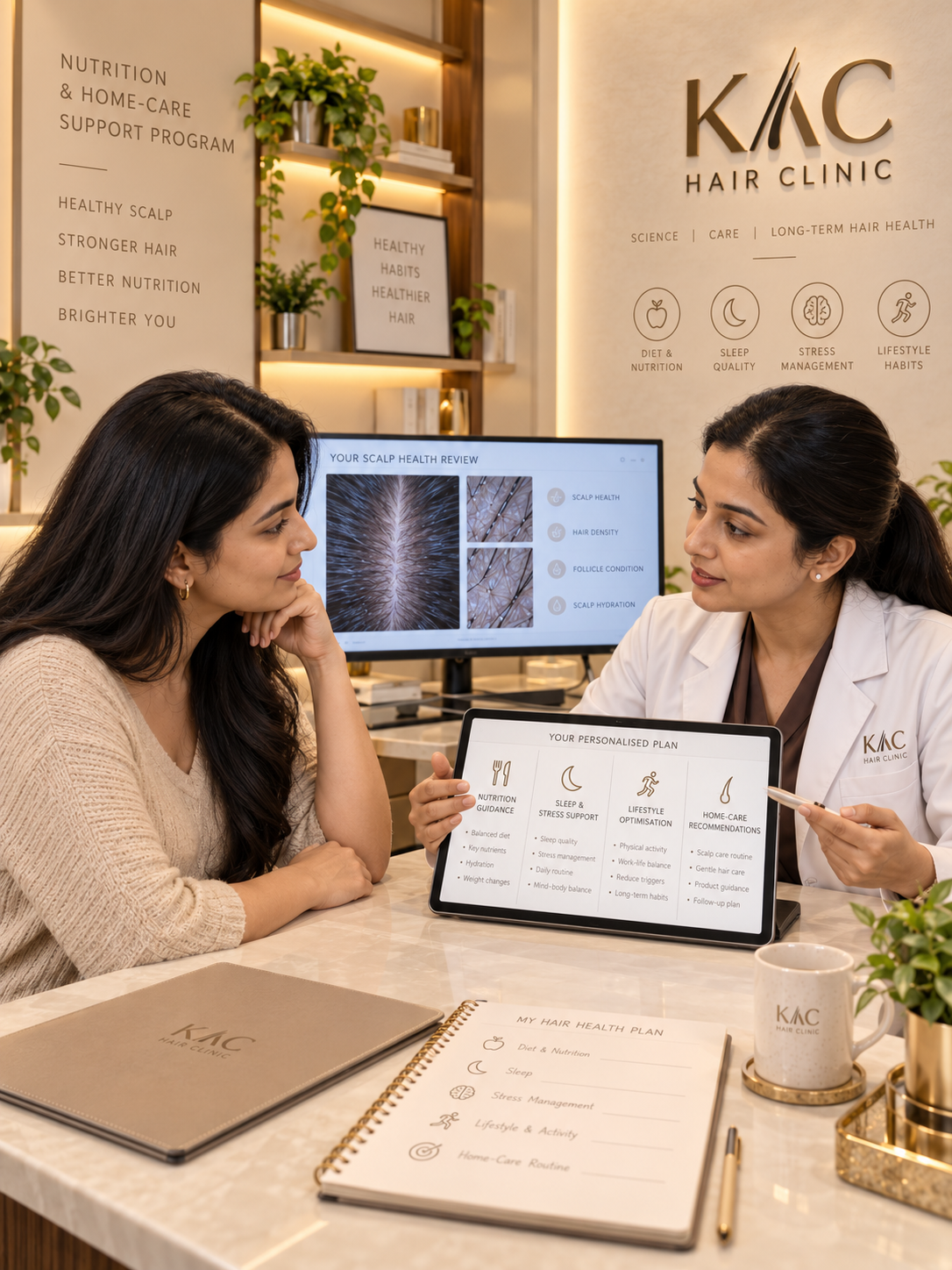
Treatment Procedures and Details
What Do We Assess?
• Dietary Pattern
Protein intake, meal quality, restrictive dieting and recent weight-loss history.
• Nutritional Risk
Possible iron, vitamin B12, vitamin D or other deficiency risk where clinically relevant.
• Hair-Shedding History
Sudden or diffuse shedding may be associated with recent illness, stress or nutritional changes.
• Scalp Condition
Oiliness, dandruff, dryness, irritation and product build-up.
• Hair-Care Routine
Shampoo frequency, conditioner use, scalp oiling and styling habits.
• Heat & Chemical Exposure
Straightening, colouring, bleaching and repeated heat exposure.
• Hair Breakage
Breakage may be mistaken for true hair fall.
• Current Treatments
Home care should complement PRP, GFC, mesotherapy, scalp therapy or medical treatment—not interfere with them.
The strategy may then focus on:
Correct → Protect → Support → Maintain
Nutrition Support
Nutrition advice should be personalised according to the client’s diet, medical history and investigations.
Important hair-health considerations may include:
Protein
Hair is primarily composed of keratin, so consistently inadequate protein intake can affect hair quality and shedding.
Iron
Iron deficiency may contribute to hair shedding in some individuals and should be confirmed with appropriate testing before supplementation.
Vitamin B12
Low levels may be relevant in selected clients.
Vitamin D
Deficiency may coexist with hair concerns, though supplementation should be based on appropriate clinical assessment.
Zinc and Other Micronutrients
These should not be taken in high doses without indication because excessive supplementation can also cause problems.
The principle is simple:
Supplement confirmed needs—not marketing trends.
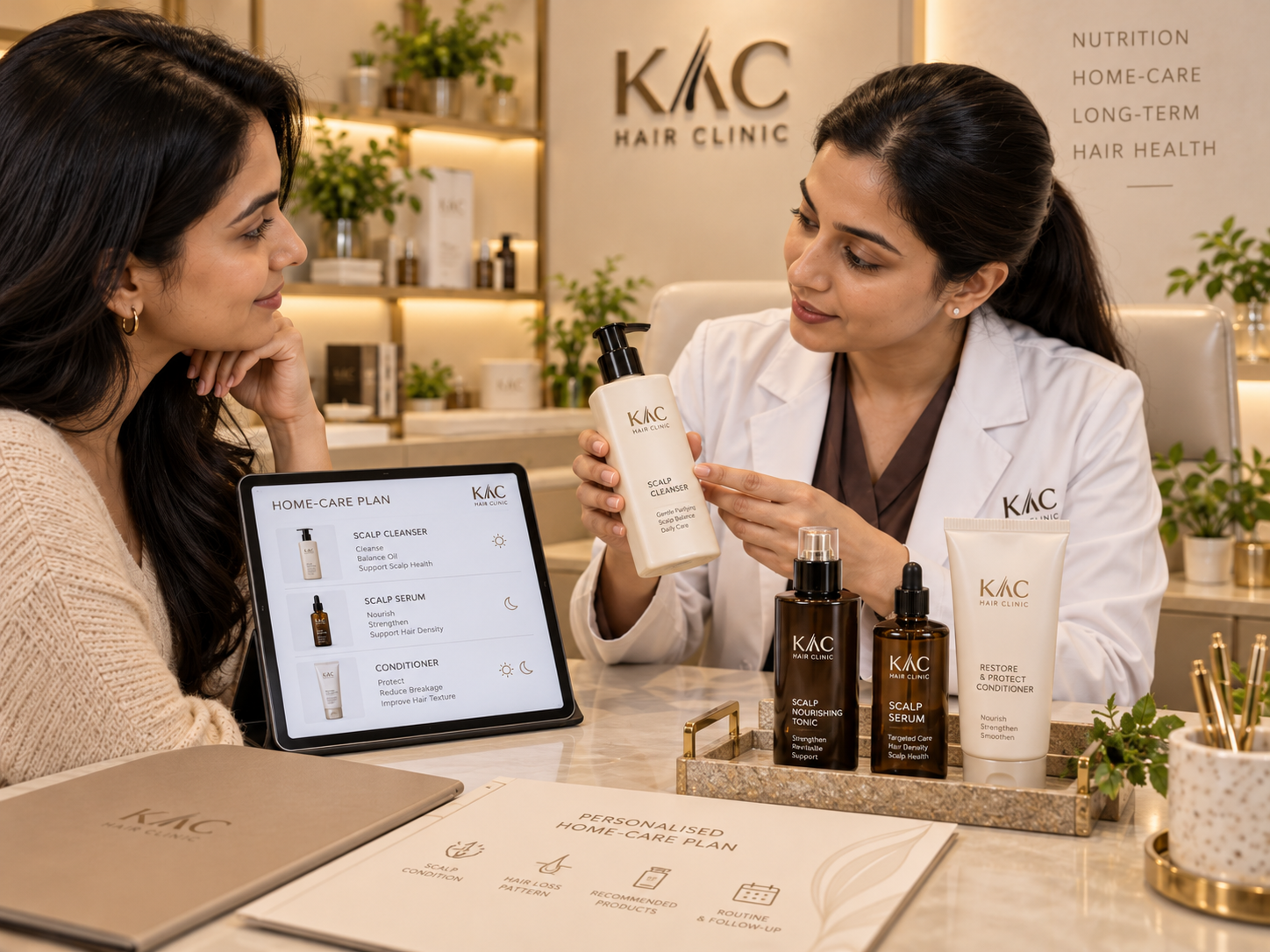
Home-Care Planning
Depending on scalp and hair condition, home care may include:
Appropriate shampoo selection
Anti-dandruff shampoo where indicated
Scalp serum or topical support where appropriate
Conditioner for hair-shaft protection
Heat-protection guidance
Hair-washing frequency
Advice on scalp oiling
Gentle styling practices
Reduced traction from tight hairstyles
Hair-colouring / chemical-treatment guidance
Maintenance between clinic visits
How the Program Works
Step 1 — Hair & Lifestyle Review
Diet, stress, sleep, recent illness, weight change and daily hair-care practices are reviewed.
Step 2 — Scalp & Hair Assessment
Scalp condition, hair quality, breakage and shedding pattern are assessed.
Step 3 — Investigations Where Needed
Selected blood tests may be advised if nutritional deficiency is suspected.
Step 4 — Personalised Nutrition Guidance
Diet recommendations are tailored to the client’s needs and medical context.
Step 5 — Home-Care Prescription
Suitable scalp and hair-care products are selected according to the treatment plan.
Step 6 — Follow-Up
The routine is adjusted based on scalp response, shedding and treatment progress.
Important Clinical Positioning
This service should not be marketed as:
“Hair regrowth through diet”
“Vitamin treatment for baldness”
“Supplements that stop genetic hair loss”
“Biotin cures hair fall”
That is weak scientifically and can damage credibility.
A better KAC message is:
“Correct deficiencies when present. Protect the scalp. Support the treatment. Maintain the result.”
Frequently Asked Questions
Can diet alone stop hair loss? Not usually when the cause is genetic, hormonal, inflammatory or medical. Nutrition can support hair health when deficiencies or inadequate intake are contributing. Should everyone with hair fall take biotin? No. Routine high-dose biotin is not automatically necessary, and unnecessary supplementation should be avoided. Do I need supplements? Only when indicated by diet, symptoms, medical history or investigations. Can low protein cause hair fall? Severely inadequate protein intake can contribute to shedding and poor hair quality. Does iron deficiency affect hair? It can contribute to shedding in some individuals, but iron supplements should be based on appropriate evaluation. How often should I wash my hair? Frequency depends on scalp oiliness, dandruff, activity level and product use. Is hair oil necessary? No. Oil may help hair-shaft conditioning, but heavy scalp oiling is not appropriate for everyone, particularly some dandruff-prone scalps. Can home care replace PRP or GFC? No. Home care is supportive and should complement the appropriate clinical treatment when indicated. Can damaged hair shafts be repaired permanently? Hair shafts are non-living structures. Products can improve feel and reduce breakage, but severely damaged strands cannot biologically regenerate.
You may also like
BookYourVisitatKAC
Healthy smiles starts with timely care.
Schedule your appointment today and let our team take care of the rest.