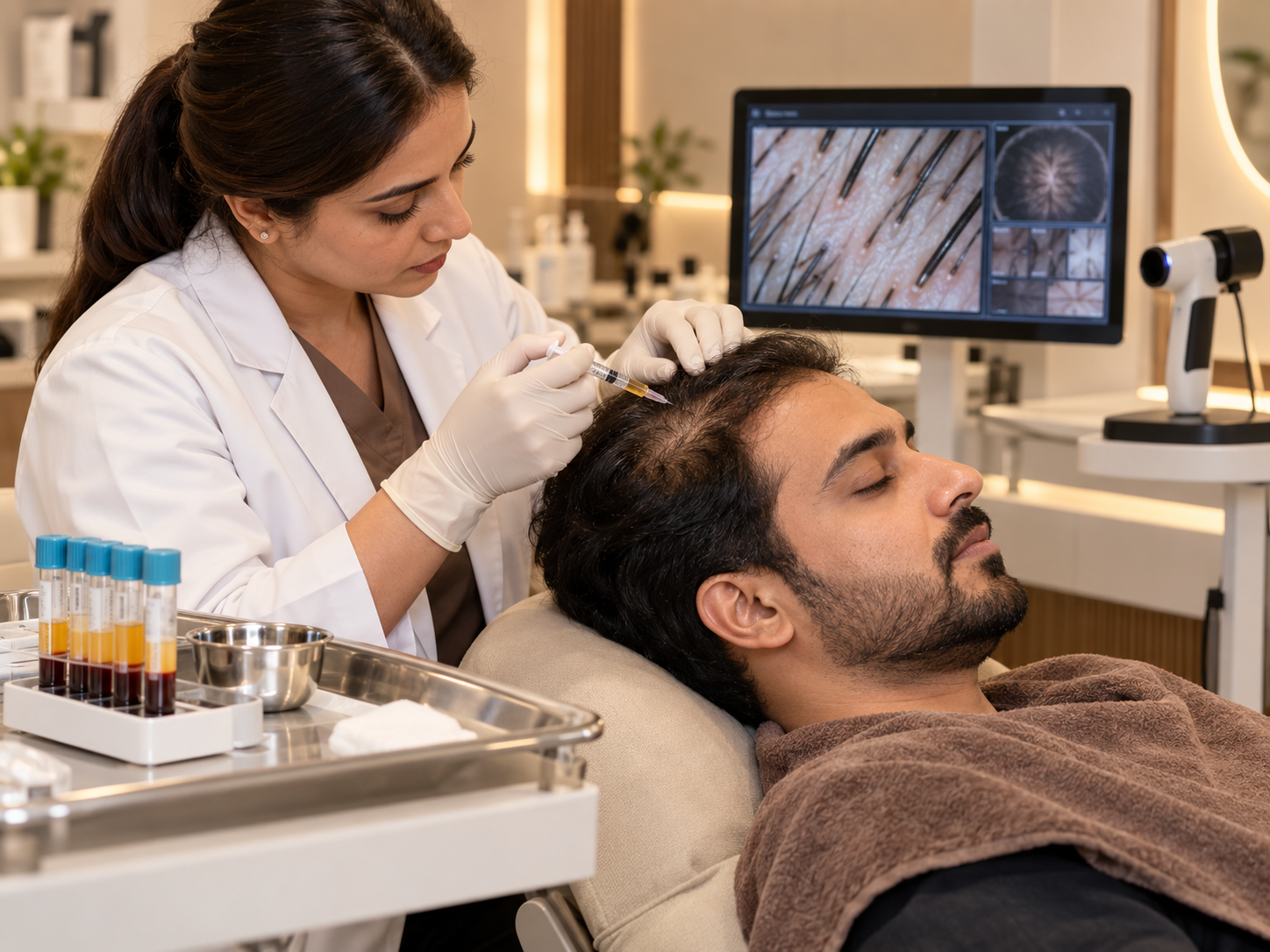
GFC Hair Therapy
clinician-guided hair restoration treatment in which a small blood sample is processed using a specialised GFC protocol to obtain a growth-factor–rich preparation that is delivered into selected thinning areas of the scalp to support existing follicles and hair quality in suitable clients.
About GFC Hair Therapy
““Concentrated growth-factor support for selected hair-loss patterns.””
GFC Hair Therapy at KAC
GFC stands for Growth Factor Concentrate.
The treatment begins with a small sample of the client’s own blood. It is processed using a specialised preparation system designed to obtain a concentrate rich in selected platelet-derived growth factors.
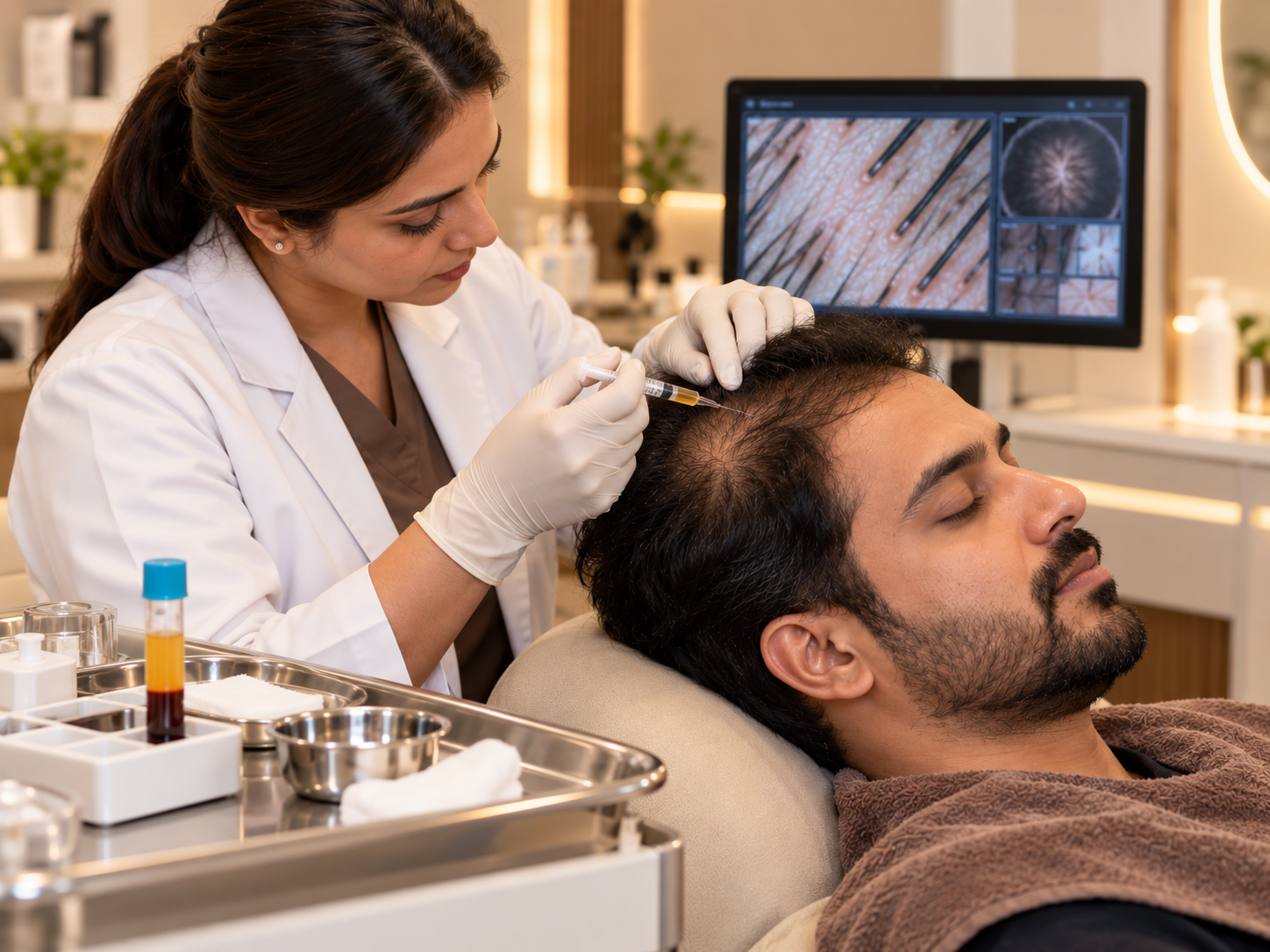
The prepared concentrate is then delivered into appropriate areas of the scalp.
Growth factors are signalling proteins involved in normal tissue repair and cellular communication. In hair restoration, GFC-based protocols are used with the aim of supporting existing viable follicles and healthier hair-growth activity.
GFC may be considered in selected clients with:
Early pattern hair thinning
Crown thinning
Frontal thinning
Reduced hair density
Hair miniaturisation
Diffuse thinning in suitable cases
Reduced hair quality
GFC is not appropriate for every form of hair loss, and it cannot restore follicles that are no longer viable.
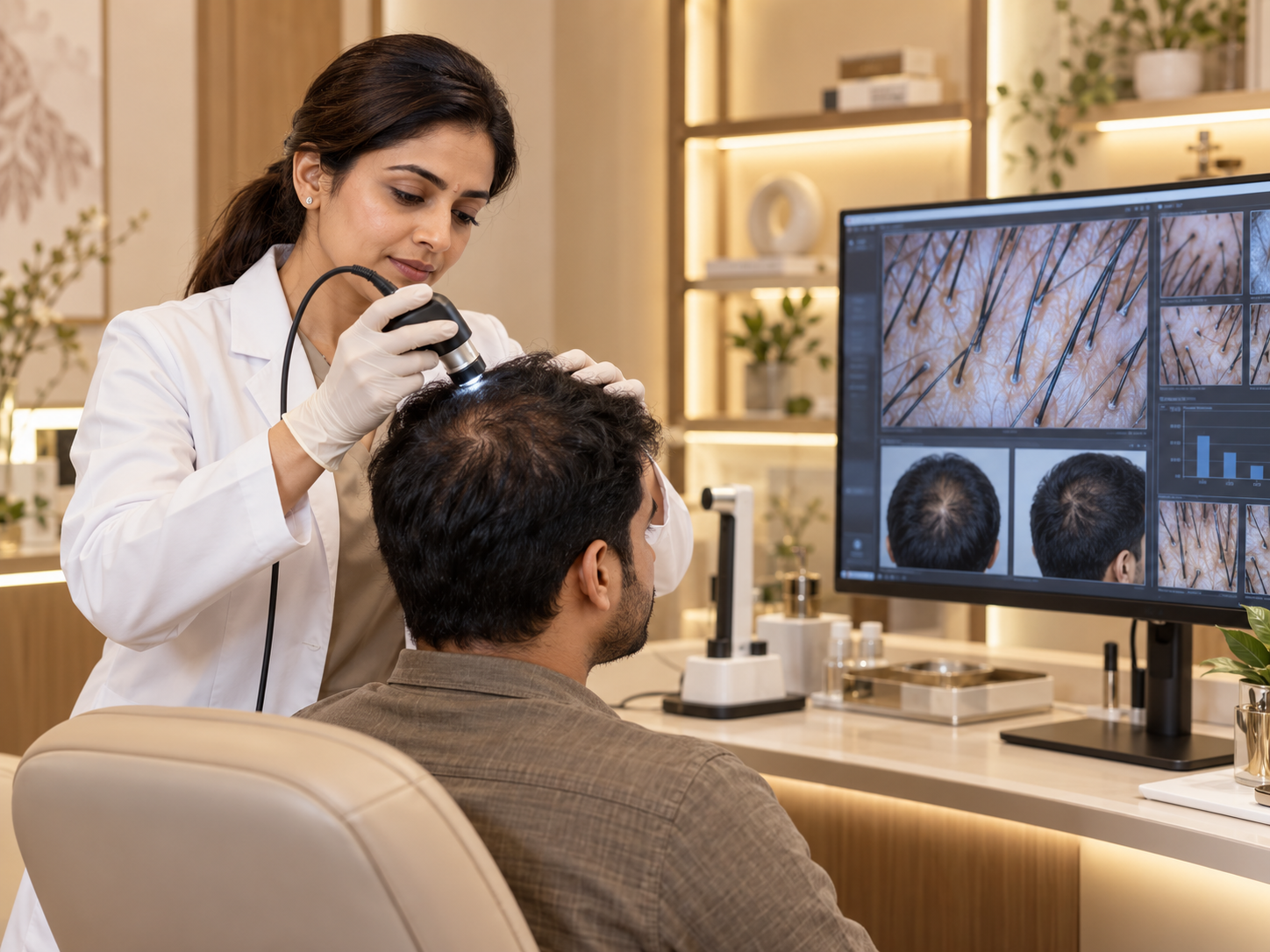
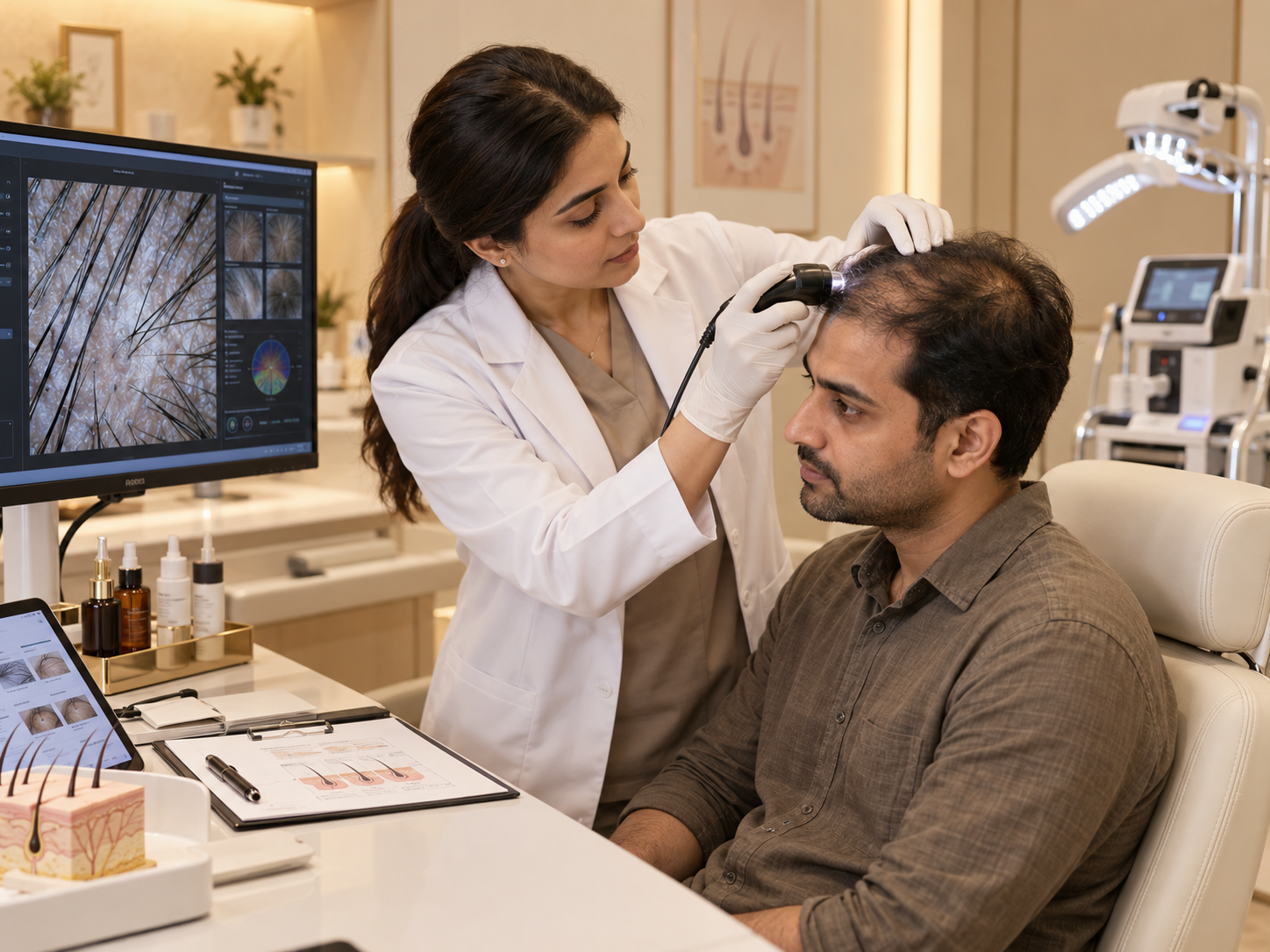
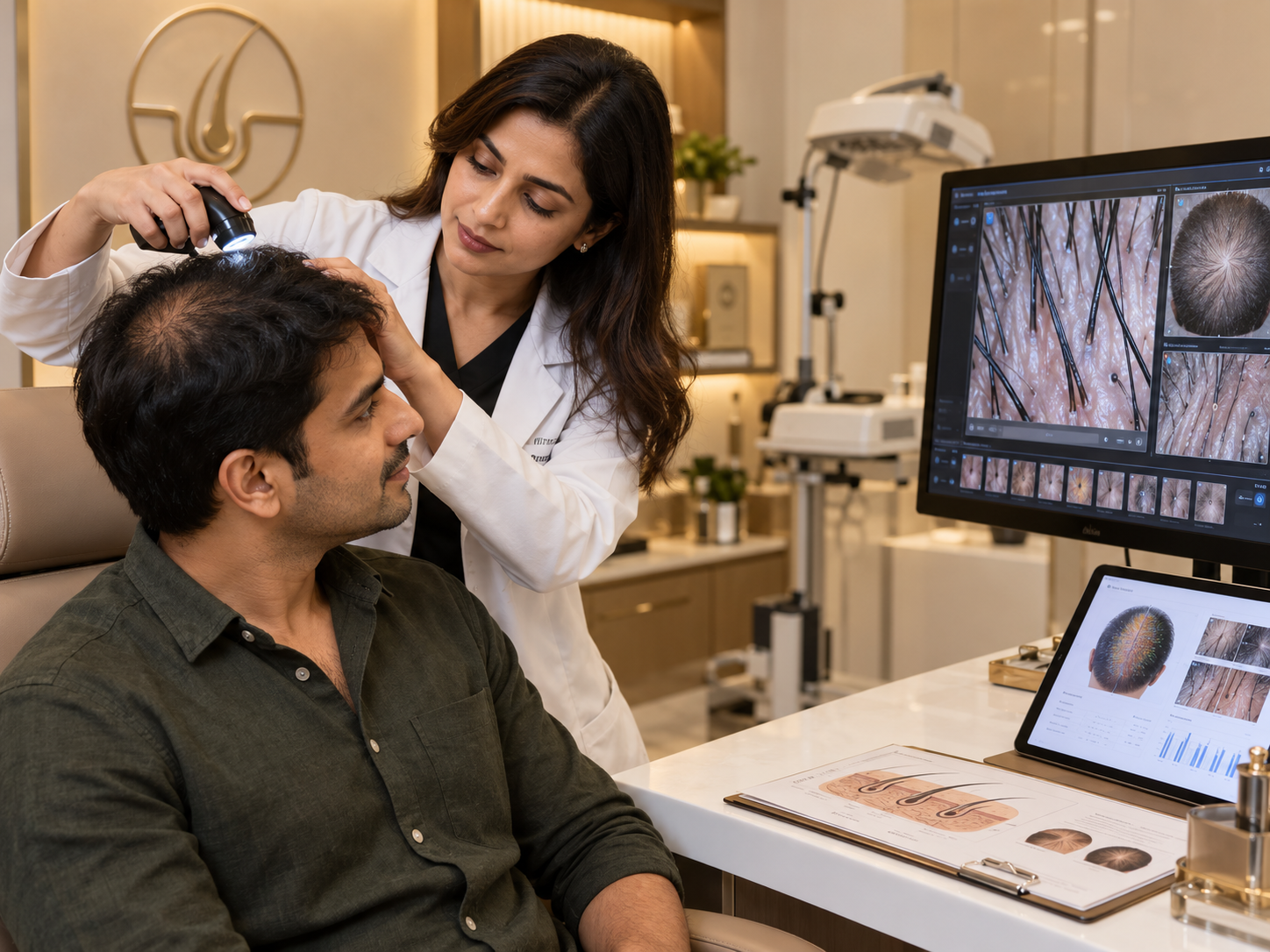
That is why KAC begins with hair and scalp assessment before recommending treatment.
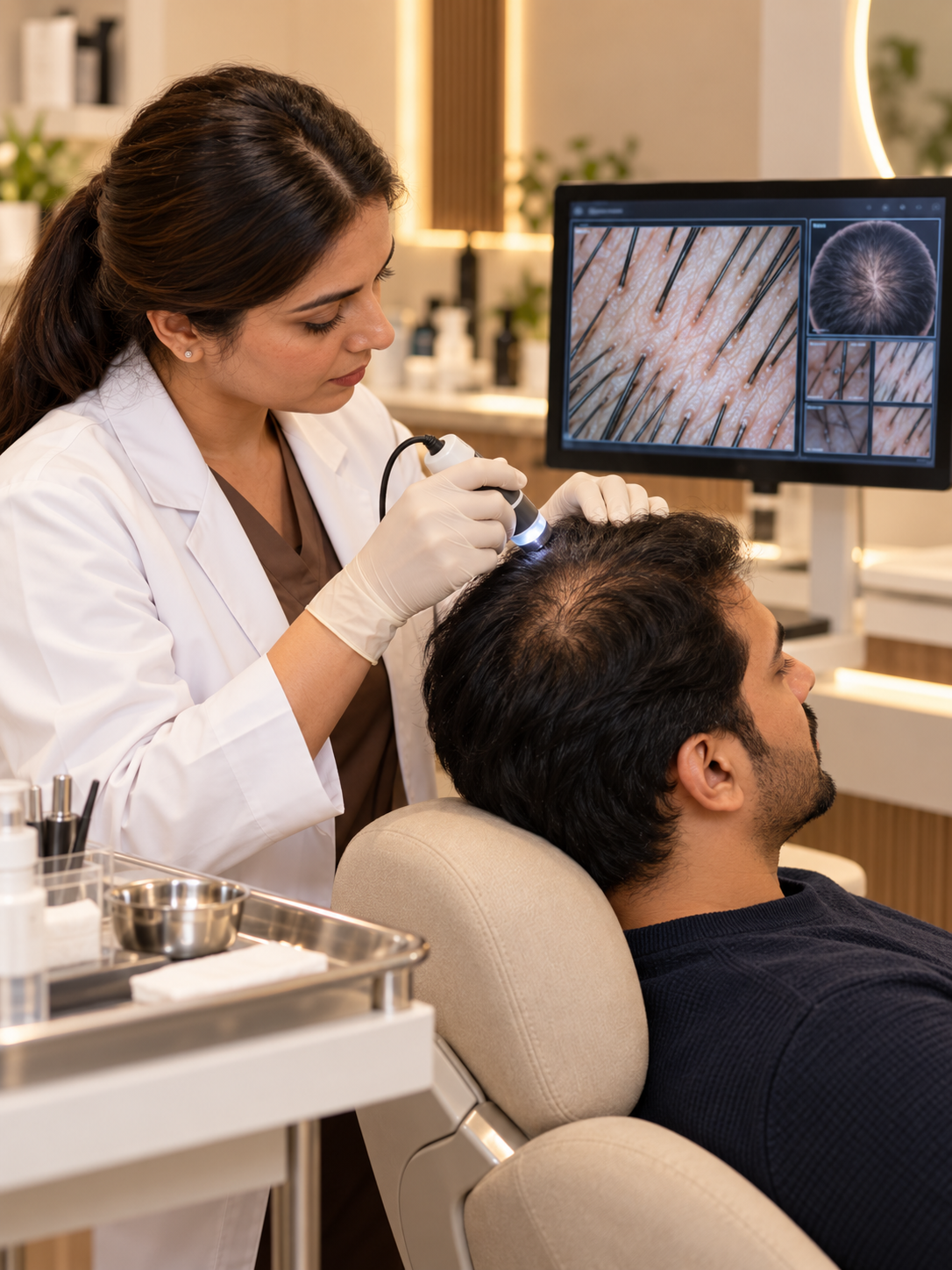
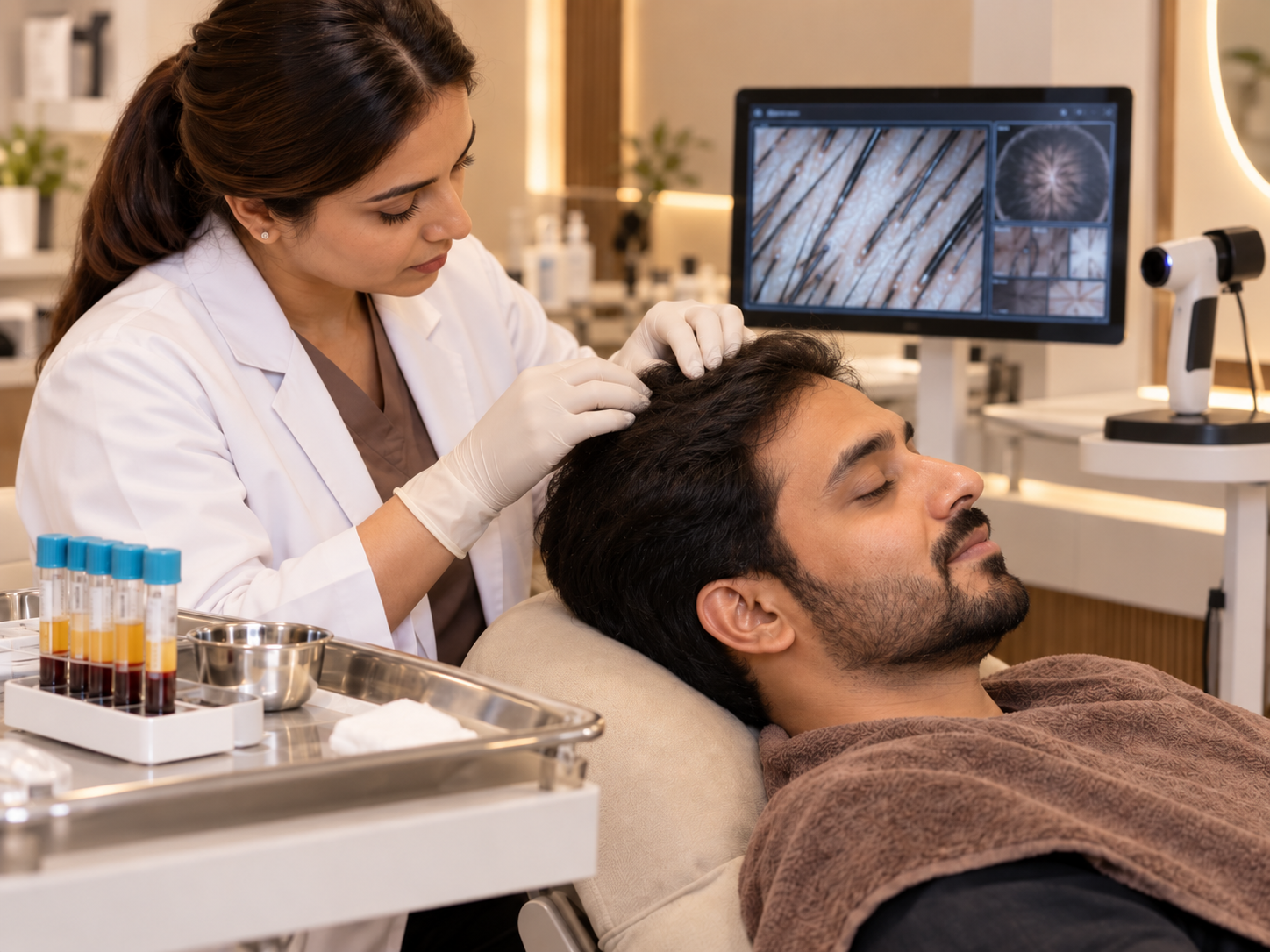
Treatment Procedures and Details
What Do We Assess?
Before treatment, we evaluate:
• Hair-Loss Pattern
Frontal, crown, diffuse or other thinning patterns.
• Follicle Viability
Whether active or miniaturised follicles remain.
• Hair Density
Current density and areas of progressive loss.
• Hair-Shaft Quality
Variation in hair diameter and miniaturisation.
• Scalp Health
Dandruff, inflammation, oiliness or sensitivity.
• Duration of Hair Loss
Earlier thinning may behave differently from long-standing follicular loss.
• Medical History
Relevant health conditions and medications are reviewed.
• Nutritional Factors
Possible iron, vitamin or other deficiencies may require investigation.
• Previous Hair Treatments
Past PRP, GFC, medications or procedures are considered.
The aim is to determine whether the priority should be:
Stabilise → Support → Stimulate → Monitor → Maintain
Step 1 — Hair & Scalp Assessment
Hair-loss pattern, density and scalp condition are reviewed.
Step 2 — Blood Collection
A small sample of blood is collected using sterile technique.
Step 3 — GFC Preparation
The sample is processed according to the selected GFC system to obtain a growth-factor–rich concentrate.
Step 4 — Scalp Preparation
The scalp is cleansed and prepared for treatment.
Step 5 — GFC Administration
The prepared concentrate is delivered into selected thinning areas of the scalp.
Step 6 — Aftercare
Clients receive post-treatment guidance and a follow-up schedule.
Step 7 — Progress Monitoring
Hair density, shedding and quality are reviewed over time.
PRP vs GFC
This section is worth including because clients will ask.
PRP uses platelet-rich plasma prepared from the client’s blood.
GFC uses a specialised processing protocol intended to isolate or concentrate selected platelet-derived growth factors.
They are related autologous treatments, but the preparation process is different.
KAC should not claim that GFC is always better than PRP.
The evidence base, preparation systems and protocols vary, so treatment choice should depend on:
Hair-loss pattern
Follicle status
Previous treatment response
Medical history
Product / kit protocol
Clinical judgement
Frequently Asked Questions
Is GFC made from my own blood? Yes. The preparation is derived from a small sample of the client’s own blood. Is GFC the same as PRP? No. Both are autologous blood-derived treatments, but the preparation methods differ. Is GFC better than PRP? Not automatically. There is no sensible reason to promise that one is superior for every client. Can GFC grow hair in a completely bald area? Response is limited if functioning follicles are no longer present. How many sessions are required? This varies according to the protocol, hair-loss pattern and individual response. When will I see results? Hair growth is slow. Improvement should be assessed over several months rather than immediately. Is GFC painful? Some discomfort may occur during scalp administration. Appropriate comfort measures may be used. Is there downtime? Temporary scalp tenderness, redness or mild swelling can occur, but most clients return to routine activities relatively quickly. Can GFC permanently cure genetic hair loss? No. Pattern hair loss is generally a long-term condition that may require ongoing management. Can GFC be combined with other treatments? Yes, when clinically appropriate. It may form part of a broader plan involving scalp therapy, nutritional correction, home care or other hair-restoration approaches.
You may also like
BookYourVisitatKAC
Healthy smiles starts with timely care.
Schedule your appointment today and let our team take care of the rest.