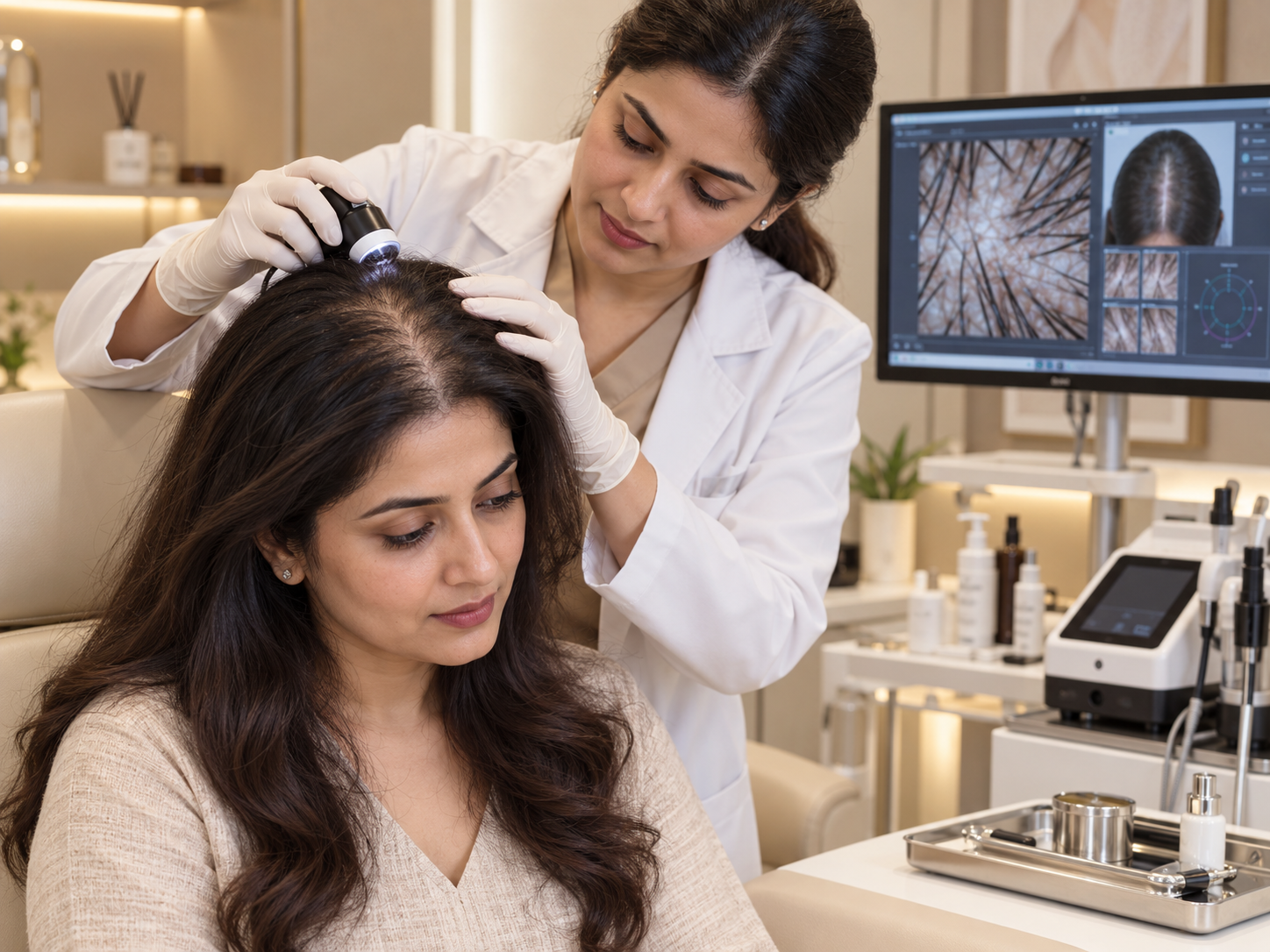
Female Hair Loss & Hair Density Program
A personalised, assessment-led program for women experiencing hair fall, widening of the part line, reduced density or diffuse thinning, combining scalp examination, digital trichoscopy, investigations where indicated and selected hair-restoration treatments.
About Female Hair Loss & Hair Density Program
““Understand the cause. Protect existing follicles. Support healthier density.””
Female Hair Loss Treatment at KAC
Hair loss in women can be more complicated than simply “weak hair.”
Some women experience excessive shedding, while others gradually notice:
Widening of the centre part
Reduced ponytail volume
Increased scalp visibility
Thinning over the crown
Frontal thinning
Excessive daily shedding
Hair becoming progressively finer
Reduced overall density
These changes can occur for different reasons.
Possible contributors include:
Female-pattern hair loss
Telogen effluvium
Postpartum shedding
Iron deficiency
Nutritional deficiencies
Thyroid-related factors
Hormonal changes
Significant stress
Recent fever or illness
Major weight loss or restrictive dieting
Certain medications
Scalp inflammation
Hair-shaft breakage
Because several causes can exist at the same time, the correct treatment should begin with understanding the pattern and likely trigger.

Treatment Procedures and Details
What Do We Assess?
• Pattern of Thinning
Central-part widening, crown thinning, frontal changes or diffuse loss.
• Hair Density
Overall scalp coverage and density changes.
• Follicle Characteristics
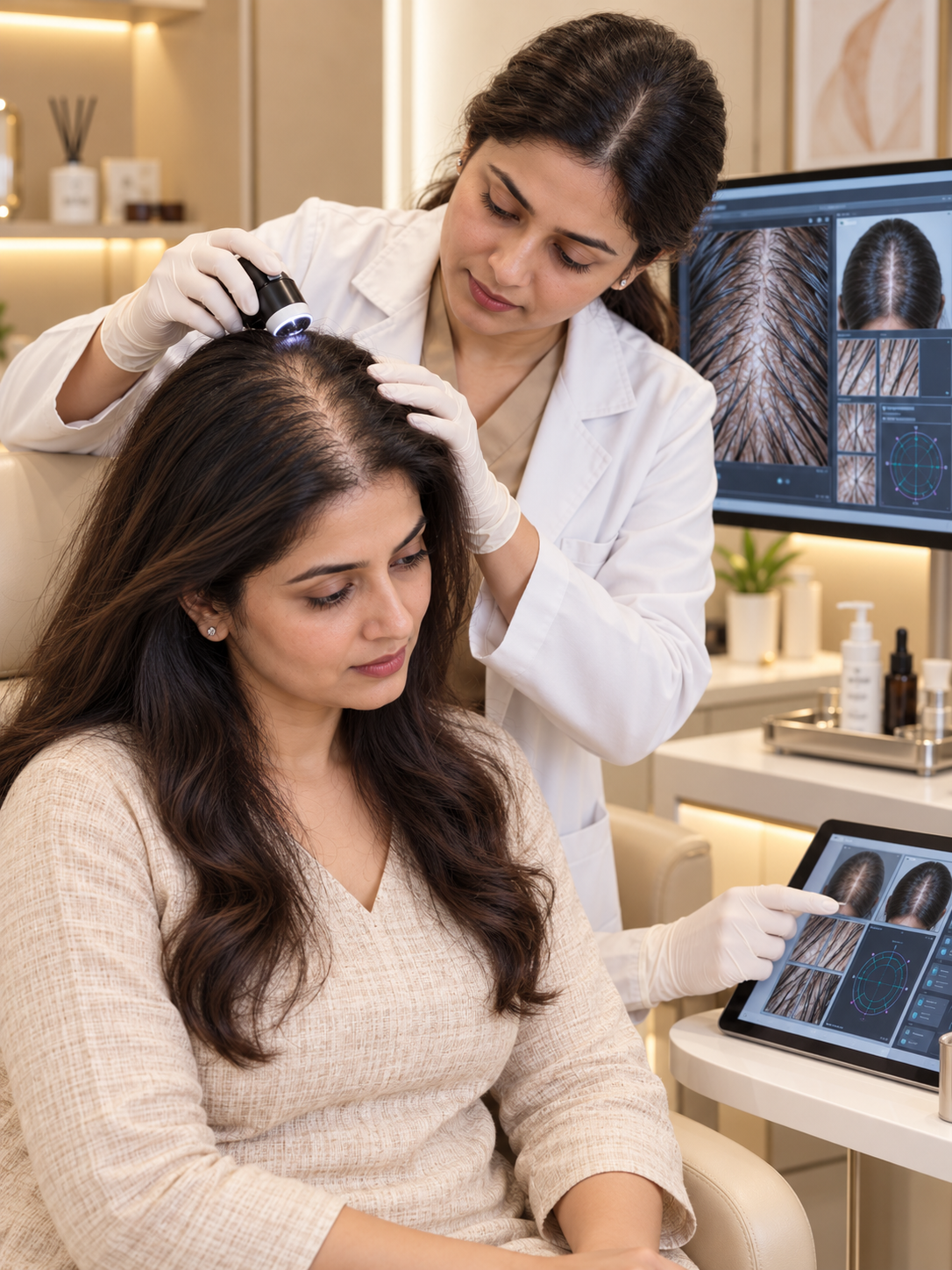
Trichoscopy may help assess miniaturisation, shaft variation and follicular openings.
• Shedding Pattern
Whether hair loss is sudden, prolonged or progressively worsening.
• Scalp Health
Dandruff, scaling, inflammation and oiliness.
• Hair-Shaft Quality
Breakage and changes in diameter are evaluated.
• Menstrual / Hormonal History Where Relevant
Changes such as irregular cycles, postpartum status or symptoms suggesting hormonal imbalance may be relevant to the assessment.
• Nutrition
Dietary intake and possible deficiency risk are reviewed.
• Medical History
Recent illness, medications and other health factors are considered.
From this assessment, the strategy may focus on:
Identify → Stabilise → Support → Stimulate → Monitor
Investigations — Where Indicated
Not every woman requires the same blood-test panel.
Depending on history and examination, investigations may include:
Complete blood count
Ferritin / iron status
Thyroid function
Vitamin D
Vitamin B12
Other tests when clinically indicated
If there are signs of a more complex hormonal or medical condition, appropriate medical or specialist evaluation may be recommended.
Possible Treatment Options
Depending on the assessment, the program may include:
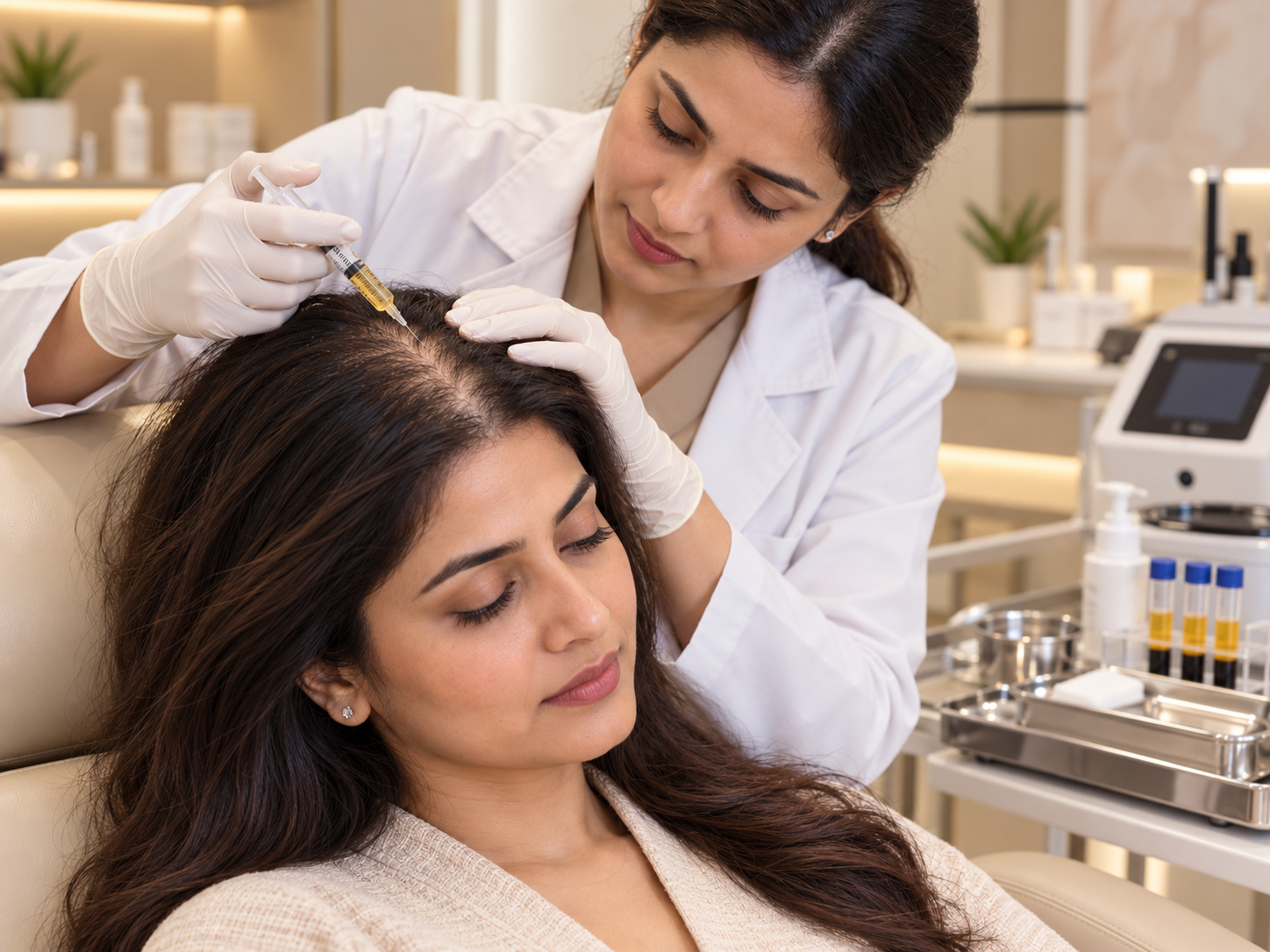
PRP Hair Therapy
May be considered where viable follicles remain and the pattern is suitable.
GFC Hair Therapy
May be used in selected clients as part of a structured follicle-support program.
Hair Mesotherapy
Selected scalp-support formulations may be incorporated where appropriate.
Dandruff & Scalp Therapy
Inflammation, flaking and scalp imbalance should be managed where relevant.
Nutritional Correction
Confirmed iron, vitamin or other deficiencies should be corrected appropriately.
Home-Care Support
Scalp care and suitable topical hair-support products may be included.
The treatment plan should follow the cause and follicle condition, not simply the severity of visible hair fall.
Step 1 — Consultation
We review when the hair loss began, how rapidly it is progressing and possible triggers.
Step 2 — Scalp & Hair Examination
The centre part, crown, frontal region and overall density are assessed.
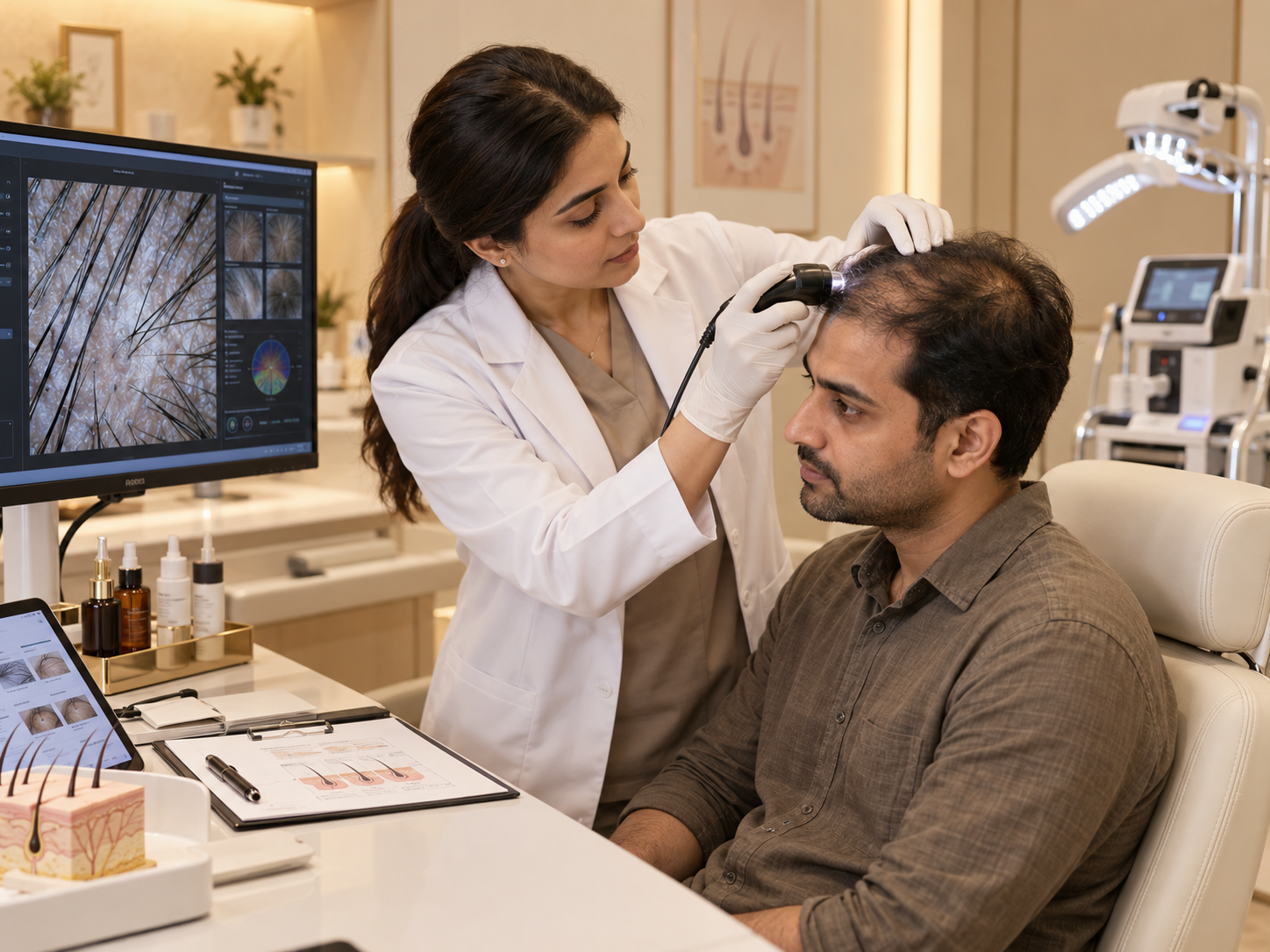
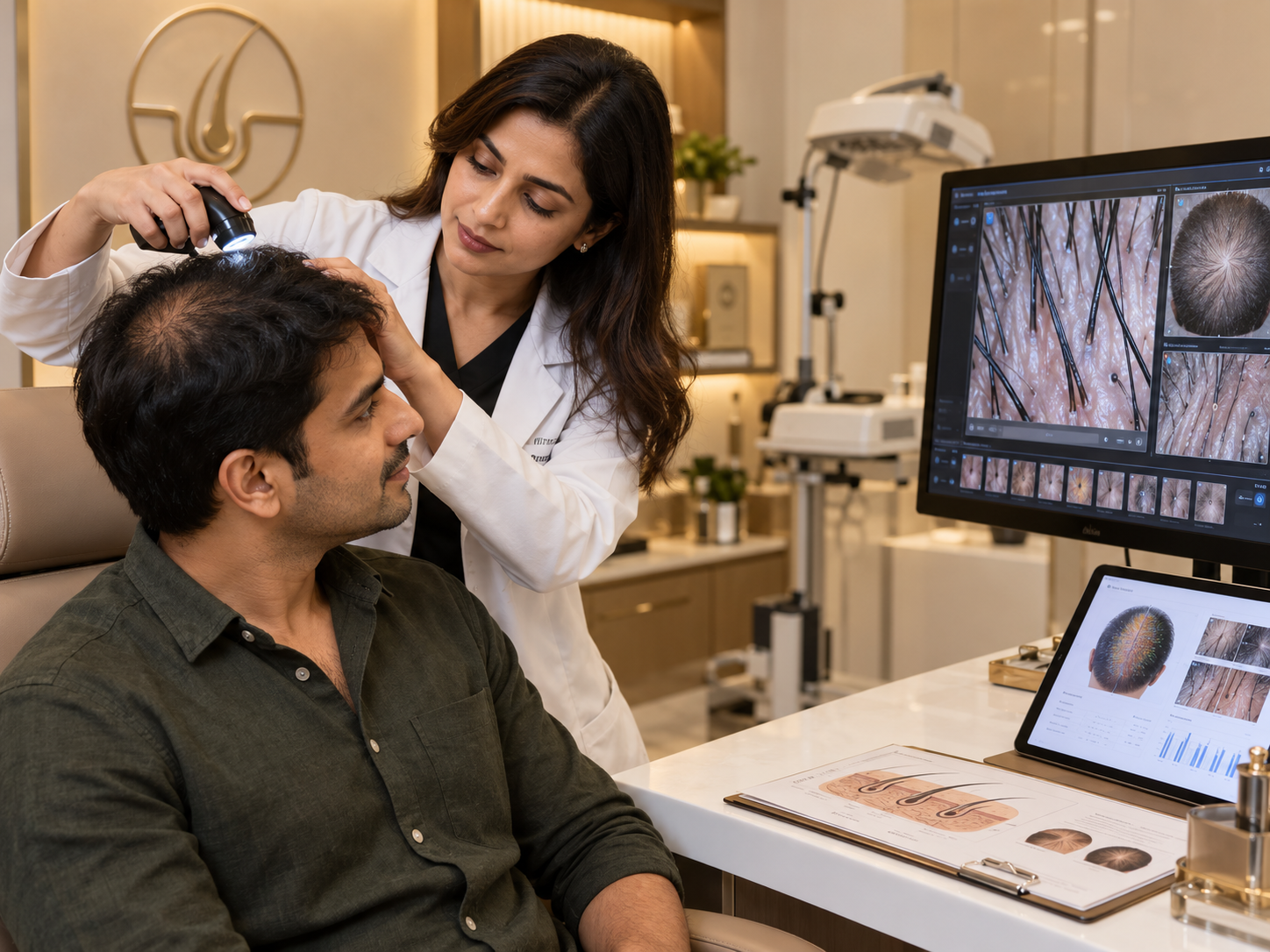
Step 3 — Digital Trichoscopy
Magnified imaging may be used to evaluate the follicular pattern and hair-shaft characteristics.
Step 4 — Investigations Where Needed
Relevant blood tests may be advised when the clinical history suggests an underlying contributor.
Step 5 — Personalised Treatment Plan
Depending on findings, PRP, GFC, mesotherapy, scalp treatment, nutritional correction or home care may be selected.
Step 6 — Progress Monitoring
Hair density and shedding are reviewed over time using consistent clinical photography and/or trichoscopy.
Step 7 — Maintenance
Many forms of female hair loss require long-term management rather than a short course of treatment.
Important Clinical Positioning
This page should clearly distinguish two very different situations:
Excessive hair shedding does not always mean permanent follicle loss.
For example, telogen effluvium can cause significant shedding after illness, stress, nutritional deficiency or childbirth.
At the same time:
Progressive female-pattern thinning may require long-term management.
That distinction is important. Otherwise every woman with postpartum shedding could be sold PRP/GFC unnecessarily, which would weaken KAC’s investigation-first positioning.
Frequently Asked Questions
Why is my centre part becoming wider? A widening part can occur with female-pattern hair thinning, but other causes should also be considered. Can low iron cause hair fall? Iron deficiency can contribute to shedding in some women. It should be confirmed through appropriate evaluation rather than assumed. Is postpartum hair fall normal? Increased shedding after childbirth is common and often improves over time, but persistent or severe loss should be assessed. Can stress cause hair fall? Major physical or emotional stress can trigger increased shedding in some individuals. Do I automatically need PRP or GFC? No. Treatment depends on the cause, follicle condition and stage of hair loss. Can completely lost follicles regrow? Non-surgical hair treatments cannot reliably recreate follicles that are no longer viable. How long before I see improvement? Hair growth is slow. Meaningful change is usually assessed over several months. Can female hair loss be permanently cured? That depends on the cause. Some shedding conditions resolve once the trigger is corrected, while genetic pattern thinning often requires ongoing management. When should I see a dermatologist or specialist? Sudden patchy hair loss, scalp scarring, significant inflammation, pain, rapid unexplained progression or suspected autoimmune disease should be appropriately referred.
You may also like
BookYourVisitatKAC
Healthy smiles starts with timely care.
Schedule your appointment today and let our team take care of the rest.